How to Study for Your DMV Permit Test in One Week (the Realistic Plan)

One week is enough time to pass, and the plan below is how we would spend it: roughly an hour a day, handbook first, then state-filtered practice, then two timed runs. Before you touch any of that, though, look up three numbers your state publishes and most study guides never mention - the retake waiting period, the time limit on the test, and how long a passing score stays valid. Those three decide whether a seven-day plan is actually seven days. A California minor who fails on day 7 cannot test again until day 14. Here is the schedule, and the scheduling.


Last verified October 14, 2026 against each state agency’s own published pages.
Day 0 - Look up the three numbers that set your real deadline
Most one-week plans treat the test as a single event with a single score. Every state publishes a question count and a pass mark, and many also publish a clock, a retake rule, and an expiry date on the result. Those last three turn a tight week into a blown month, and we read eight state driver license agency pages directly to assemble the table below because no single source carries them together.
Take California. The state driver handbook’s testing section says you get three attempts to pass before you must reapply, and that minors must wait seven days to retake a failed knowledge test, not counting the day they failed. That single rule means a 16-year-old in California who books test day for the end of the week has no recovery slot inside that week. Idaho’s handbook sets the wait at three days and charges the knowledge test fee again. Build the week backwards from that number, not forwards from today.
| State | Questions | To pass | Time limit | Retake wait | Score valid for |
|---|---|---|---|---|---|
| Maryland | 25 | 88% (22 of 25) | 20 minutes | not published | 6 months |
| Florida | 50 | 40 of 50 (80%) | not published | not published | not published |
| New York | 20 | 14 of 20, plus 2 of 4 sign questions | not published | not published | not published |
| Georgia | 20 + 20 (two tests) | 15 of 20 on each | not published | not published | 1 year |
| Missouri | 25 | 20 of 25 (80%) | not published | not published | not published |
| Idaho | 40 | miss 6 or fewer | not published | 3 days, fee again | not published |
| California (18+, original) | 36 | 30 of 36 | not published | 3 attempts, then reapply | not published |
| California (under 18) | 46 | not published | not published | 7 days for minors | not published |
Two entries deserve a flag. Maryland’s MVA states that all knowledge and skills test passing scores are valid for a maximum of six months, and Georgia’s DDS says knowledge exam scores expire after one year. Pass early, stall on the road-test side, and in Maryland you can be made to sit the written test again.
Day 1 - Read your state handbook once, fast
Set aside 60 to 90 minutes and read the whole handbook in one pass. Do not memorize. Do not take notes. You are building a mental map of what exists, so that tomorrow’s questions feel familiar instead of foreign.
Use your own state’s handbook and nothing else. The test is drawn from it directly: Missouri’s Driver Guide states that all of the test questions come from information found in the guide, and Idaho’s handbook warns that web-based practice tests are not an accurate representation of its knowledge tests. Open the states directory to confirm your format, then download the handbook from the agency itself. You will forget most of today by Thursday, and that is fine. Recognition is the goal, not recall.
Day 2 - Take a baseline test, untimed, with the handbook open
Take one full-length permit practice test in your state’s format. Do not time it. Do not guess: when you do not know, mark the question and look the answer up in the handbook before you move on. Expect 60 to 90 minutes. You will learn more from this one test than from reading the handbook three more times.
Write down which categories you lost points in. Most people cluster into three buckets: signs, right of way, or alcohol and drug rules. Whichever is worst is where the rest of your week goes. Clearing your state’s pass mark on the baseline does not mean you are done, because test-day nerves cost most people a question or two.
Day 3 - Drill the one category you bombed
Take yesterday’s worst category and run it alone. Thirty to fifty questions, filtered to that topic, with the explanation read on every miss. Understanding beats memorizing here, because scenario questions re-skin the same rule a dozen ways.
Right-of-way trips up almost everyone. Two base rules carry most of the questions: at an uncontrolled intersection the first vehicle to arrive goes first, and the vehicle on the right goes first only when two arrive together, and a four-way stop follows the same order: first to arrive, with ties broken in favor of the car on the right. Learn those cold, then work the exceptions your handbook spells out.
Day 4 - Signs day, and why some states score signs separately
Signs are the highest-leverage day of the week because they are pure recognition. No judgment, no scenario, no exceptions. If you can name every sign in your handbook on sight, you have banked a large block of the test before you walk in.

R1-1 regulatory
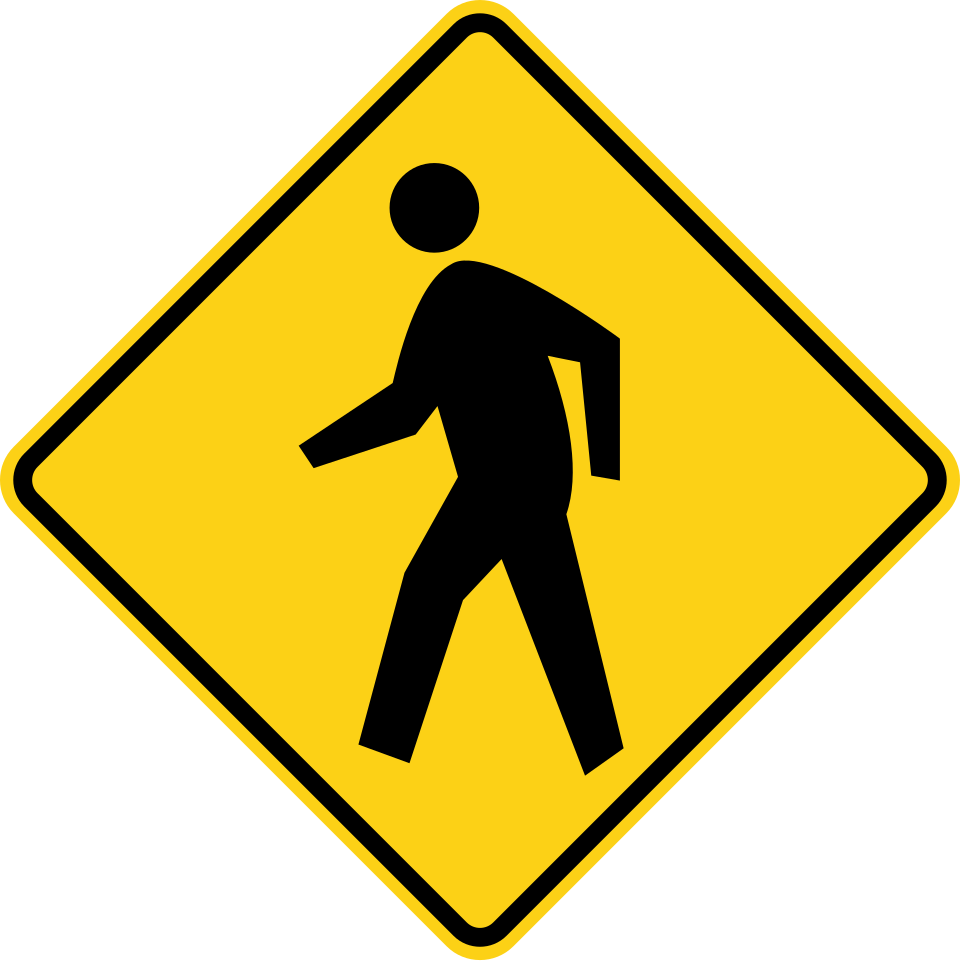
W11-2 warning
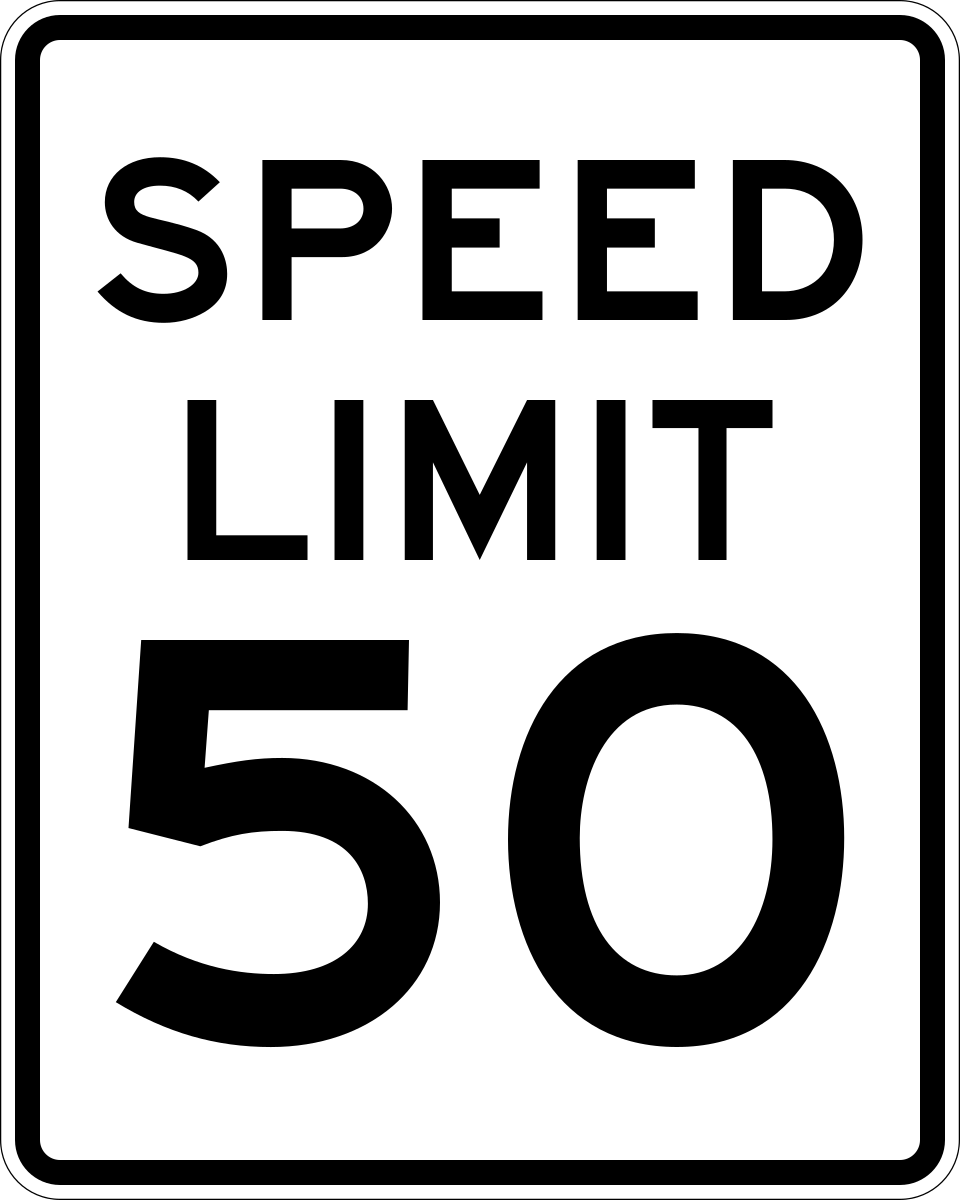
R2-1 regulatory
In three of the states we checked, signs are not just a share of the score - they carry their own pass mark, which means a strong overall percentage will not save you. New York’s driver’s manual states that to pass you must correctly answer at least 14 of the 20 questions asked, and that you must correctly answer two of the four questions about road signs. Georgia splits the exam into a Road Rules test and a Road Signs test and requires 15 of 20 on each, per the Department of Driver Services. Missouri runs the sign recognition test as a separate requirement from the 25-question written exam entirely.
| State | How signs are scored | What that means for your week |
|---|---|---|
| New York | 2 of the 4 sign questions must be correct, on top of 14 of 20 overall | Missing 3 sign questions fails you at 17 of 20 |
| Georgia | Separate 20-question Road Signs test, 15 correct required | A perfect Road Rules score does not offset it |
| Missouri | Sign recognition is its own test, separate from the written exam | Two things to pass, not one |
Spend the day on shape and color first, then on the text-heavy ones. The white rectangular regulatory signs are the ones people skip because they look obvious, and they are where the misses concentrate. Work the yellow diamond warning signs next, then finish with a timed run through a road signs practice test until nothing makes you pause.
Day 5 - State-specific rules, the ones generic prep misses
Open your state page and work through the rules of the road that vary: blood alcohol limits, signaling distance, school bus passing, child restraint thresholds, and the point system. These are the traffic laws that punish anyone who studied with a national question bank.
Format varies as much as content. California leans on right of way and alcohol sections. Texas presses on right-on-red exceptions. Florida runs 50 questions and asks about hurricane evacuation signage. New York is unusually scenario-heavy for a 20-question test. Georgia gives its road signs test in English only, even though road rules is offered in other languages. Reading that one line on the DDS site is worth more than an hour of generic drilling if English is your second language.
Day 6 - Two full timed tests, because the clock is real
Two full-length practice tests today, both timed, both in your state’s exact format, with a 30-minute break between them. The second should feel easier than the first. That gap is the muscle memory you want on test day.
Time pressure is the variable nobody studies for. Maryland’s MVA gives you 25 questions and 20 minutes, which works out to 48 seconds per question including the time you spend re-reading the tricky ones. Practice at that pace, not at a leisurely one. Score yourself honestly: 90% or better on both runs and you are ready; 80 to 89% and tomorrow is a drilling day; below 80% and you should move the appointment if your state lets you. Maryland’s own permit guidance notes that about half of first-time test takers fail, which is the most honest pass-rate statement we have found on any state site and a better reason to prepare than any number we could publish ourselves.
Day 7 - Light review, then stop
Do not cram. Run a 15-minute pass over every question you got wrong this week, using a mistakes-only mode if your app has one. Skim the handbook’s signs section once more. Then stop and sleep early, because the test is recall under mild stress and tired brains do not recall well.
Test-day morning: eat something, bring your ID, proof of residency, and parent paperwork if you are under 18, and arrive 15 minutes early. The test itself usually takes 20 to 30 minutes. If you do fail, the waiting period you looked up on day 0 tells you exactly when you can go again, and in California that retake process has its own rules worth reading before you need them.
What if you have less than a week?
Three days is the realistic floor. Compress it: day 1 is handbook skim plus a baseline test, day 2 is signs plus state-specific rules, day 3 is two full timed tests. Tight, but it works if you are disciplined about looking up every wrong answer.
One day is a gamble rather than a plan. Take three or four full practice tests in your state’s format and look up every miss. A focused day puts you ahead of a meaningful share of the room, but it is still the version of this plan we would talk you out of. If the appointment can move, move it and read how long the test actually takes to prepare for first.
Common mistakes during the week
A few patterns blow up otherwise reasonable study plans.
Thinking in overall percentage. The New York candidate who scores 17 of 20 and misses three of the four sign questions fails, despite being at 85%. Check whether your state has a sub-score before you decide signs are a low-priority day.
Studying without a state filter. If your practice app serves the same questions whether you pick California or Wyoming, half of what you study will not be on your test. Pick a state-specific source and confirm the question count matches what your agency publishes.
Re-reading the handbook instead of testing yourself. Reading is not testing. After day 1’s full read, switch to active recall. A second pass through the handbook returns a fraction of what one more full practice test does. If a one-week plan means re-testing more than once a day, the free and premium feature comparison spells out which limits apply.
Trusting a question count you found on a blog. We tried to verify Michigan’s for this guide and could not. The Secretary of State’s own pages recommend studying What Every Driver Must Know and describe the online knowledge test as multiple choice, but publish no question count and no passing score for it; the only percentage we found on michigan.gov was the 70% required on the Segment 2 driver education classroom exam, which is a different test. Third-party sites confidently report 50 questions, 25 questions, and 80 questions for the same exam. When the agency is silent, study the manual and ignore the number, and treat our Michigan guide and every other secondhand source the same way.
Cramming the night before. Sleep beats another 30 minutes of drilling. Stop by 9pm.
Choosing a practice app for the week
Three things to check before you commit a week of study time to any app:
- State-specific filtering. If the same 25 questions appear whether you select California or Wyoming, the bank is not filtered to your state.
- Format match. The practice exam should match your real test in question count and pass mark: 50 questions and 40 correct in Florida, 25 questions and 88% in Maryland, 20 questions with a sign sub-score in New York.
- Wrong-answer review. The ability to re-drill only what you missed is the single most useful feature in any prep app. Random mode every session spends your week on material you already know.
Accuracy is the thing you cannot check from the outside, which is why we audit ours. Building DMV Ready we re-verified every answer against official state sources, corrected 28 of them, re-scoped 7 questions to the right state, and removed 8 that were structurally broken. Sign and right-of-way items are where sources disagree most.
If you are testing in a tough state
Some states leave almost no margin. Maryland‘s 88% pass mark over 25 questions means three misses end the attempt, and you have 20 minutes to make them or not. Idaho allows six misses out of 40, then a three-day wait and another fee. In states like those, stretch the plan from 7 days to 10 if the appointment allows: add a second signs day and a second scenario day.
Pass marks alone are a poor difficulty ranking, though. Florida asks 50 questions and allows 10 misses; Maryland asks 25 and allows 3. Neither percentage captures that difference. Compare question count, miss budget, and clock together, which is what our 50-state format breakdown and state-by-state difficulty guide are built to do. The full signs reference covers the recognition half of all of it.
Start tonight with day 0, not day 1. Find your state’s question count, pass mark, retake wait, and score-validity window on the agency’s own site, then book the appointment far enough forward that a failed attempt still fits. Download the handbook, read it once tomorrow, and put the remaining five days into state-filtered practice with the sign sub-score rules in mind. When you are ready to drill, DMV Ready filters every question to your state, matches your real test format, and keeps a mistakes-only deck for the last day. Pick your state and run a baseline test tonight.
FAQ
Is one week enough to study for the permit test?
For most people, yes, at about an hour a day. The material is broad rather than hard. What ruins a one-week plan is scheduling, not studying: check your state’s retake waiting period before you book, because in California a minor who fails waits seven days to try again.
Should I read the handbook or just take practice tests?
Both, in that order. The handbook gives you the framework and is the literal source of the questions: Missouri’s Driver Guide says all of the test questions come directly from information found in the guide. Practice tests tell you which parts of that framework get asked about.
How many practice tests should I take before the real test?
At least five full-length tests in your state’s format. The first is your baseline, three or four are practice, and the last one is the day before, timed and scored honestly. If you are not at 90% by then, you are not ready.
How many questions are on the permit test in Michigan?
The Michigan Secretary of State does not publish a question count or a passing score for the knowledge test on its own pages. It describes the online test as multiple choice and directs applicants to What Every Driver Must Know, especially chapters 4 through 7. Third-party sites report 25, 50, and 80 questions for the same exam, so treat any specific number you see as unverified and study the manual instead.
What day of the week is best to take the test?
Pick a day that leaves room for a retake inside your deadline. If your state imposes a waiting period, as California does with seven days for minors and Idaho with three days plus another fee, testing early in the week gives you a second attempt that a Friday appointment does not.
How long does a passing knowledge test score stay valid?
It varies and it does expire. Maryland’s MVA states that all knowledge and skills test passing scores are valid for a maximum of six months, and Georgia’s DDS says knowledge exam scores expire after one year. If a gap is likely between your written test and your road test, check your state’s window first.
Sources checked October 2026: the California DMV driver handbook testing section, the Maryland MVA knowledge tests page, the Florida DHSMV Class E knowledge exam page, the Georgia DDS testing information section, the Missouri Driver Guide, the Idaho driver’s handbook, and the Michigan Secretary of State new driver pages. State rules change; confirm against your own state’s agency before test day.
Practice for your state in DMV Ready
All 50 states plus DC. 4,000+ questions, filtered to your state, with a mistakes-only drill for the last day. Free to start.