Can You Get the Real DMV Test Questions?

Search for the real DMV test questions and you will find hundreds of pages promising them. The honest answer is that no state hands over the live question bank it uses at the counter. What several states do publish is official sample material, and that material beats anything sold as a leak. California posts four complete Class C sample tests. Indiana publishes a 16-question practice exam with an answer key. Washington runs a five-question official practice test. New York builds quizzes into its manual. Below is what each of those actually contains, why a single fixed list of exam questions cannot exist, and what to study instead if you want to pass on the first attempt.
No state hands out its live question bank
Every state builds its knowledge test from its own driver handbook, then keeps the working item pool closed. That is not secrecy for its own sake. A knowledge test that circulates as a public answer key stops measuring anything, so licensing agencies treat the live pool the same way any testing body does.
California states the position plainly on its own sample-test page: “DMV periodically adds new questions to the sample tests,” according to the California DMV sample knowledge test library. The samples move because the real pool moves. The testing-process section of the California Driver Handbook closes the other door too: “You are not allowed to use any testing aids during knowledge tests, such as a California Driver’s Handbook or cell phone.” You get three attempts before you have to reapply, and a minor who fails waits seven days before retaking.
Rotation is the other reason a leaked list decays. Agencies add items, retire items that perform badly, and reissue forms after a handbook revision, so a set copied down two years ago describes a test that no longer exists in that exact shape. Several states also run their knowledge test online now, either at home or through a school program, which makes a static answer key even less useful because the delivery software draws from the pool at the moment you sit down. The material that keeps its value is the handbook itself, since the questions are written from it rather than the other way around.
So the useful question is not where to find leaked questions. It is which states publish official practice material, how much of it there is, and what the scoring rules do to a test-taker who studied the wrong thing. Anyone getting ready for the California permit test is better served by four official sample tests than by a list scraped from a forum three years ago.
What the official sample tests actually give you
Several states publish real, downloadable or interactive practice material under their own agency name, and a free DMV practice test from the agency that writes the exam carries information no commercial page can match. We pulled each source directly this week rather than trusting a roundup. Note that what most states call the DMV written test is the same thing this table calls a knowledge test, and none of it is the driving test, which happens in a car with an examiner.
| State | What the agency publishes | Size | Notable detail |
|---|---|---|---|
| California | Four interactive Class C sample written tests | 4 full tests | Offered in nine languages plus American Sign Language |
| Indiana | Practice Knowledge Examination PDF with answer key | 16 questions | Split into 6 sign questions and 10 traffic questions |
| Washington | Online Driver License Practice Test | 5 questions | Available in English and Spanish |
| New York | Practice quizzes at the end of manual chapters | Chapters 4-11 plus road signs | Tied to the exact chapter the question came from |
| Delaware | Sample Driving Exam web app | Interactive | Runs inside the DMV site, no download |
Indiana’s version is the most transparent of the group. The BMV Practice Knowledge Examination gives you six sign questions, ten traffic-law questions, and both answer keys, and it names the manual chapters each half comes from: signs live in Chapter 6, traffic rules in Chapters 6, 7 and 8.
Washington is the most honest about its own limits. Its practice test tells you up front: “You can take the test as often as you want, but you will get the same five questions each time.” Five questions, four correct to pass the practice run. That is a warm-up, not a study plan, and the Washington Department of Licensing testing page says the real thing runs 40 questions with 32 correct required.
New York takes a different route and it is the most useful one for studying. Rather than a standalone practice test, the state puts quizzes at the end of the manual chapters covering rules of the road, Chapters 4 through 11 plus road signs, so every practice question sits next to the passage that explains it. New York also runs its Class D permit test in 20 languages and offers an in-school online testing program for students who are at least 15 years and 11 months old. Delaware keeps a Sample Driving Exam running inside its own DMV site, no download and no account.
Why one fixed list of real questions cannot exist
Here is the part almost nobody publishes, and it settles the question. California’s DMV has released its own research on the written tests it administers. Technical Monograph 196, Development and Evaluation of Revised Class C Driver License Written Knowledge Tests, documents the structure directly: “There are 10 different versions or forms of the English DL 5 examination and five forms of the Spanish DL 5 examination, each consisting of 36 items.” The report adds that “There are five different forms of the English DL 5T examination, each consisting of 46 questions,” the DL 5T being the test given to original applicants under 18.
Count that. In one state, in English alone, the department documents ten adult forms and five provisional forms. A leaked set of 46 questions would, at best, be one of five provisional forms, from whichever revision was in circulation when someone copied it down. The same report notes another wrinkle most study guides miss: renewal applicants “complete only the first 18 items,” while original applicants answer all 36. Two people can sit the same test and answer a different number of questions.
That monograph was published in 2002 and its statistics are historical, so we are not quoting its pass rates here. The structural point holds and it is the department’s own description of how the DL 5 series is built: multiple parallel forms per language, revised over time, drawn from a pool that grows. Ask for the real questions and you are asking for something that has no single answer even inside one state’s filing cabinet.
The scoring rules that decide the outcome
Two people can miss the same number of questions and get opposite results, because states do not score alike. These rules matter more than any question list, and they come straight from the agencies.
| State | Questions on the real test | To pass | Rule that surprises people |
|---|---|---|---|
| Nevada | 25 multiple choice | 80 percent | Test stops at 20 correct or 6 incorrect |
| New York | 20 | 14 correct | You must also get 2 of the 4 road-sign questions right |
| Indiana | Two components: signs and traffic law | 80 percent on each component | Strong on one half does not rescue the other |
| Washington | 40 | 32 correct | A passing score stays valid for 2 years |
| California (under 18) | 46 | 38 correct | Three attempts, then you reapply |
| Illinois | 35 | Set by the facility | 15 of the 35 are sign identification |
Nevada’s rule is the one worth reading twice. The Nevada DMV testing page states that the knowledge test “consists of 25 multiple-choice questions” and that “the test will stop when you have reached 20 correct answers or six incorrect.” Six wrong answers ends the attempt on the spot, whether that happens on question 8 or question 24. Somebody who plans to guess early and recover late has already lost.
New York’s sub-score works the same way in miniature. Fourteen of twenty is the headline number, but two of the four sign questions are mandatory, which is why sign recognition carries weight far past its share of the test. If you cannot separate a yield sign from the other triangular warnings, or read a stop sign variation at a controlled intersection, four questions can cost you the whole attempt. Our road sign reference exists for exactly this reason.
Illinois pushes that weighting further than anywhere else we checked. The Illinois Secretary of State states that “the written exam consists of 35 questions, 15 of which will address traffic sign identification, and the remaining 20 will either be multiple-choice or true-false questions.” Signs are 43 percent of the Illinois exam. The state also publishes a Rules of the Road Review Workbook that carries written-exam sample questions and a summary of every traffic sign, which makes it one of the better pieces of free state-published test prep in the country. Anyone told that a generic DMV practice test is enough should sit with that number for a moment: fail the signs in Illinois and the multiple-choice half cannot save you.
Washington adds a wrinkle in the other direction. A passing knowledge-test score there stays valid for two years, so the test and the license application do not have to happen the same week, and the state offers the exam in 12 languages. Washington is also changing what sits around the test: starting November 1, 2026, first-time driver license applicants under the age of 25 must pass a free online course on work-zone and first-responder safety before they can be licensed. That is not part of the knowledge test, but it is a new requirement in the same pipeline, and it is the kind of 2026 change a downloaded question list will never tell you about.
The mistake that sends people back for a retest
The costly pattern is not laziness. It is drilling a downloaded list of “real questions” that covers one topic well and ignores the rest, then meeting a test that scores topics separately.
Picture an Indiana applicant who spends a week on a 50-question traffic-law list found online. On test day the traffic half goes fine. The sign half does not, because signs were never in the list. Indiana’s official instructions are explicit: “On the actual knowledge examination, you must have 80% or higher correct on each component to pass the exam.” Two correct out of six on signs is 33 percent, and the attempt is over regardless of how the traffic questions went. That is a failure produced entirely by the shape of the study material.
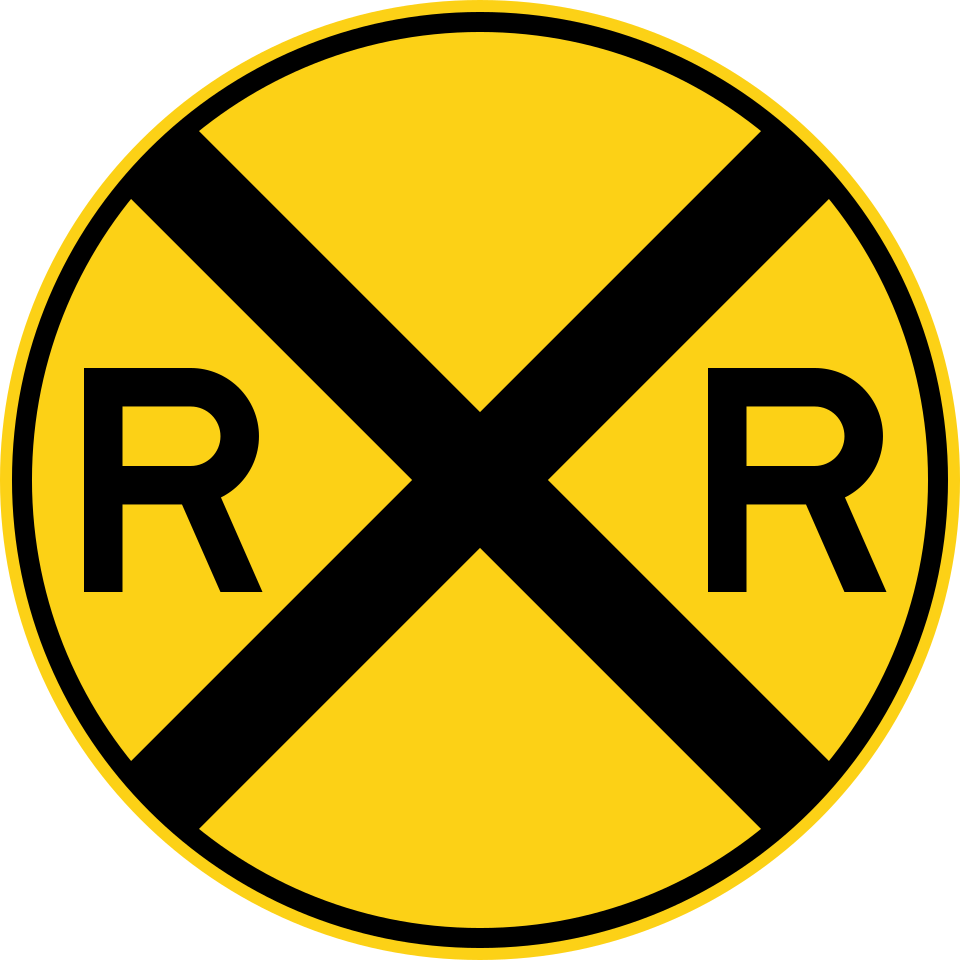
Indiana’s published sign questions ask you to name what a shape means before you read a word of legend, which is why shape recognition is worth drilling on its own. Three of the six run on exactly this.


The same trap sits in New York’s two-of-four sign requirement and in every state that splits a knowledge test into parts. Coverage beats volume. A hundred memorized answers on right-of-way will not carry someone through a section on parking rules or a sign shape they have never studied. We wrote about the specific items that trip people up in our guide to the hardest permit test questions, and the pattern there is the same: people fail on the topics they skipped, not on the ones they found hard.
How we build practice questions from the handbook instead
Driver education programs solved this problem decades ago by teaching the manual rather than the answer sheet, and a DMV practice test only earns its place when it does the same. We built DMV Ready around the source the states actually use. Every question traces to a state driver handbook or an official DMV page, because that is where the real exam draws from, and it is the only provenance that survives a rule change.
That approach has a cost, and we have paid it. When we ran a full re-verification of the bank against official state sources, we corrected 28 answers that no longer matched the current handbook, removed 8 questions that were broken, and re-scoped 7 questions that had been filed under the wrong state. Rules move. A question about headlight distance or a right-turn-on-red exception can be correct in one state and wrong one border over, which is why we keep 1,961 state-specific questions alongside roughly 2,000 universal ones across all 50 states and DC.
Building that also taught us how uneven the official material is. Indiana publishes its practice exam twice, once as a standalone PDF and once inside Chapter 9 of the driver’s manual. We compared the two this week: same 16 questions, but the answer options are shuffled between versions. The tractor-trailer stopping-distance question lists 50 feet first in the manual and 100 feet first in the PDF. Anyone who memorized “the answer is C” from one file would pick the wrong letter from the other. That is a small thing, and it is exactly why letter-memorization loses to understanding the rule.
Coverage is the other half of the design. A permit test does not weight topics evenly, and neither should a study session. We keep the bank sorted into 14 topics, and the distribution follows what handbooks actually spend pages on: licensing and permits, driving laws and defensive driving carry the most questions, while narrow areas like road markings and speed limits carry the fewest. Alongside the questions sit roughly 1,700 study cards, which is the part people skip and then wish they had not, because a card explains why the rule exists and a question only checks whether you remembered it.
Practical study order, if you want one: read your state’s handbook chapters on signs and right of way first, work the official samples your state publishes, then drill by topic until the weak areas stop being weak. Our practice test sorts questions into 14 topics for that reason, and the state guides carry the local numbers. If you are testing in Nevada, Washington or Indiana, start with the state page, since the scoring rule shapes how you should pace yourself. Our permit test cheat sheet collects the numbers worth memorizing.
Frequently asked questions
What are the questions on the California DMV permit test for 2026?
There is no published list. California posts four official Class C sample tests and updates them over time, and its own research documents multiple parallel forms of the real exam. Study the samples and the handbook rather than hunting for a fixed set.
What is the most failed question on the permit test?
No state publishes item-level failure data for its current exam, so any page naming one specific question is guessing. The consistent weak areas across handbooks are right of way at uncontrolled intersections, following distance, and sign shapes.
What are the 50 questions on the Indiana permit test?
Indiana’s knowledge exam is not a fixed 50-question list. The BMV publishes a 16-question practice exam, 6 on signs and 10 on traffic law, and the real exam scores those two components separately at 80 percent each.
Is the Nevada permit test 25 questions?
Yes. Nevada’s Class C knowledge test is 25 multiple-choice questions with an 80 percent passing score, and the DMV stops the test once you reach 20 correct answers or six incorrect ones.
Are online practice tests the same as the real DMV test?
No practice test reproduces the live exam. A good one matches your state’s handbook, question count and scoring rule closely enough that the real test feels familiar, which is what practice is for.
Is it illegal to study a leaked list of DMV questions?
Copying material during a test is prohibited everywhere, and California bans testing aids outright. Studying an old question list beforehand is mostly just ineffective, since the pool changes and the list rarely matches your state.
Start with your state, not with a list
The search for real DMV test questions ends in the same place every time: your state handbook, plus whatever official samples your agency chose to publish. Those samples are worth working through, and they run out fast, five questions in Washington and sixteen in Indiana. What fills the gap is coverage across every topic your state tests, scored the way your state scores it. Pick your state guide, work through the topics you have been avoiding, and practice in DMV Ready until the weak areas stop showing up in your results.