Washington State Permit Test 2026: Score, Fees, and New Rules
Washington’s permit test is a 40-question multiple-choice exam, and you need 32 correct (80 percent) to pass. Applicants can apply for an instruction permit at 15 when enrolled in an approved driver education course, or at 15 and a half without one. That threshold has held steady for years. What shifted in 2026 is the rest of the path: a new work zone and first responder safety course now applies to first-time drivers under 25, and the long-standing “skip driver ed once you turn 18” shortcut is being phased out under RCW 46.20.1191 and its companion schedule. This guide walks through the test itself, the $35 permit fee, the 2026 rule changes, and the intermediate license restrictions that kick in the day a driver passes.
Washington permit test at a glance
The Washington State Department of Licensing (DOL) runs the knowledge exam, but it almost never administers it at a DOL office. Both the 40-question written test and the later 100-point drive test are handed off to approved driver training schools and testing businesses. Applicants schedule with one of those locations, not a state branch, which surprises people who picture a DMV waiting room. The knowledge test pulls from traffic laws, road signs, safe driving practices, impaired driving, and what to do after a collision. A passing 32-of-40 result stays valid for two years, so there is no need to rush the rest of the process.
Here are the core numbers, drawn straight from the DOL testing pages.
| Item | Washington requirement |
|---|---|
| Knowledge test questions | 40 multiple choice |
| Correct answers to pass | 32 of 40 (80 percent) |
| Knowledge score validity | 2 years |
| Languages offered | 12 (including Spanish, Korean, Russian, Vietnamese, Arabic, Punjabi, Tagalog) |
| Drive test score to pass | 80 of 100 |
| Drive score validity | 1 year |
| Instruction permit fee | $35 (valid 1 year, renewable twice) |
| First license fee | $111 for 6 years or $131 for 8 years |
| Where you test | Approved driver training schools and testing businesses, not DOL offices |
One detail worth circling: the test is delivered in 12 languages, including Spanish, Korean, Russian, Vietnamese, Arabic, Punjabi, and Tagalog. Non-native English speakers do not have to wait or hire a translator. Few states match that range, and Washington publishes the full list openly rather than burying it.
The 2026 change every Washington applicant should know
Most guides still describe Washington as a state where driver education matters only for applicants under 18. That picture is now out of date. Two changes, both written into state law, reshape the path for anyone getting a first Washington license.
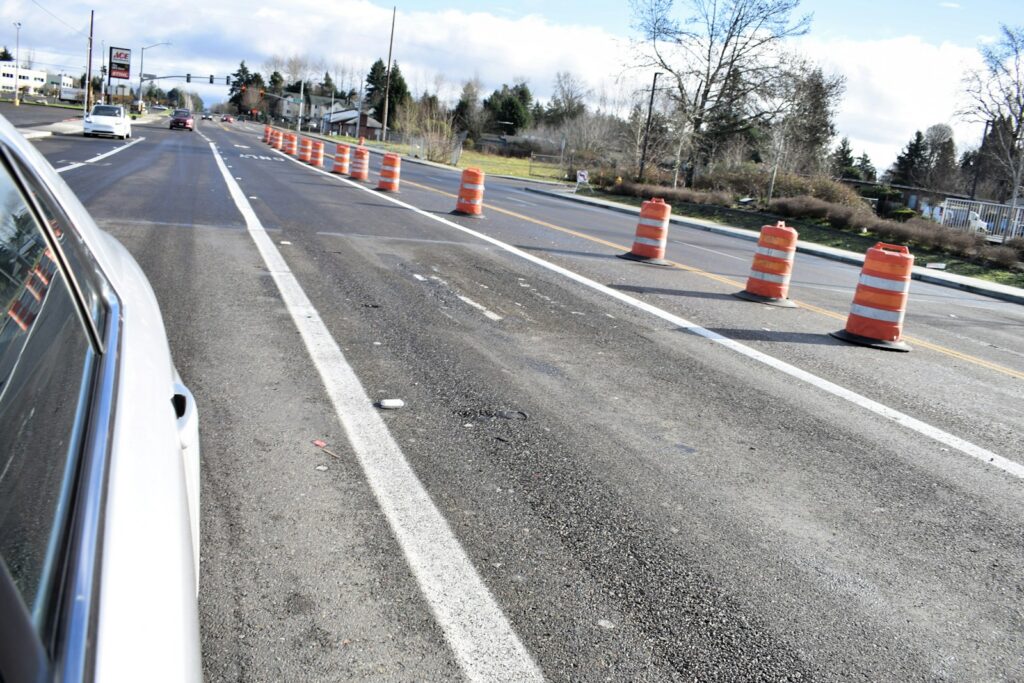
The first is brand new. Beginning May 1, 2026 and running through January 1, 2031, any applicant for an initial driver’s license under the age of 25 must pass an online course on driver work zone and first responder safety, approved by the department. The rule lives in RCW 46.20.1191, and the department can waive it only if the course is not available at the time of application. It exists for a grim reason: errant vehicles struck and killed dozens of emergency responders working at roadway incidents in 2024, and tens of thousands of work zone crashes happen each year. Washington decided new drivers should learn how to pass a crash scene before they get a license, not after.
A second change phases out the old age-18 escape hatch entirely. For years, an adult could skip formal driver ed once they turned 18. Lawmakers found that first-time drivers between 18 and 24 crash at higher rates than peers who trained before 18, so the requirement now climbs year by year. An 18-year-old who waited will no longer be able to wait their way out of the classroom.
Who needs driver education now
Driver education in Washington still means a state-approved course of 30 hours of classroom instruction plus 6 hours of behind-the-wheel time. What is changing is who has to take it. Under-18 applicants have always needed it to get licensed before turning 18. The phase-in below, set by statute, extends that mandate upward one birth year at a time.
| Effective date | Driver education required for first-time applicants |
|---|---|
| Now | Under 18 (to license before 18) |
| May 1, 2026 | Work zone and first responder course added for everyone under 25 |
| January 1, 2027 | Adds ages 18 to under 19 |
| January 1, 2028 | Adds ages 18 to under 20 |
| January 1, 2029 | Adds ages 18 to under 21 |
| January 1, 2030 | Adds ages 18 to under 22 |
Read the table as a moving line. A 20-year-old applying in 2026 still skips the full 30-hour classroom course but owes the work zone module. The same 20-year-old applying in 2028 would owe both. For applicants close to one of these cutoffs, the cheapest move is often to finish licensing before the next January 1 line crosses their age. Washington built the schedule to nudge people toward training earlier rather than later, and it lands hardest on adults who keep putting the license off.
How to get your Washington instruction permit
The permit is the on-ramp, and the rules are concrete. Applicants can apply at 15 with enrollment in an approved driver education course, or at 15 and a half without one. The permit costs $35, stays valid for one year, and can be renewed twice. While a permit is active, practice on public roads requires a supervising driver who has held a license for at least five years, and the permit holder cannot drive alone. Phone use is off limits unless the call is to 911.
To get the permit, an applicant passes the 40-question knowledge test and brings proof of identity, a Social Security number, and proof of Washington residency. Teens under 18 also need a parent or guardian to sign. The state recognizes that the document checklist trips people up, so confirm the paperwork against the DOL learner permit page before driving to a testing site. For broader test confidence first, the state-by-state practice hubs and the dedicated Washington practice test mirror the real question mix.
What the knowledge test covers and how to pass it
Forty questions sounds small until the eight-question margin sinks in: miss nine and the test is a retake. The exam weighs road signs heavily, so knowing what a stop sign legally requires, and how right of way at intersections actually works, pays off more than memorizing trivia. Washington’s own breakdown spans traffic laws, signs, safe driving habits, the rules around alcohol and drugs, and crash response.
The smartest preparation treats the signs and right-of-way sections as guaranteed points. Those questions reward recognition, and a focused study session can lock them in. The trickier items test judgment: following distance, speed adjustment for weather, and who yields when two cars reach an intersection at the same moment. Practicing real questions until the reasoning feels automatic beats rereading the handbook cover to cover. The California and Oregon practice sets share much of the same national core for extra reps.
The common mistake that catches adults: An over-18 applicant in 2026 who deliberately waited past the driver-ed cutoff and clears the 40-question exam in one sitting can still be turned back at the counter, because as of May 1, 2026 anyone under 25 must complete the work zone and first responder safety course before a license issues. A year earlier the same applicant would have walked out licensed the same day. The lesson under RCW 46.20.1191: an over-18 applicant in Washington is no longer exempt from every training step, and the age band of applicants who owe driver education itself widens every January.
After you pass: the intermediate license restrictions
Drivers under 18 do not receive a full license. They get an intermediate license, governed by RCW 46.20.075, and its restrictions are stricter than many new drivers expect. The biggest surprise is how the passenger rule works in the first six months: no passengers under 20 at all unless they are immediate family. After six months that loosens to a cap of three passengers under 20.
| Restriction | Rule under the intermediate license |
|---|---|
| Night driving | No driving 1 a.m. to 5 a.m. unless a licensed driver 25 or older rides along (school, religious, or work travel excepted) |
| Passengers, first 6 months | No passengers under 20 except immediate family |
| Passengers, after 6 months | No more than 3 passengers under 20 except immediate family |
| Phone use | No wireless device while driving, except to report an emergency |
| How long it lasts | Until age 18, or removable at 17 after 12 clean months |
Reaching that intermediate license takes 50 hours of supervised driving, 10 of them at night, certified by a parent, guardian, or employer. The permit must be held at least six months, driver education must be finished, and no traffic convictions can appear in the prior six months. Tracking the hours as they accumulate is a useful habit, which is why this site offers a supervised driving hours log for exactly that purpose. The restrictions can be lifted at 17 if the driver goes a full 12 months with no accidents, no traffic convictions, and no violations of the license terms. Most teen states follow a similar arc, mapped in the guide to graduated driver license stages.
The drive test itself is its own hurdle once the permit period ends. It is scored out of 100, and a passing score is at least 80, valid for one year. Because Washington routes the exam through approved schools and testing businesses rather than state branches, applicants bring their own vehicle and must show proof of auto liability insurance plus valid registration, current tabs, and plates. A car that fails the pre-test safety check, or a lapsed insurance card, ends the appointment before it starts, so confirm those documents the night before.
One enforcement nuance worth knowing: the passenger and 1 a.m. to 5 a.m. night limits are generally secondary offenses, meaning an officer needs another reason to pull the car over first. That does not make them optional. A violation still goes on the record and can delay the day those restrictions come off. Washington’s setup mirrors the national pattern behind night driving restrictions for permit holders, and the parental sign-off rules echo what is covered in who can supervise a permit driver. For the most recent state walkthrough in this series, see the Georgia permit test guide.
Frequently asked questions
Quick answers to the questions Washington applicants search most.
How many questions are on the Washington permit test?
The knowledge test has 40 multiple-choice questions. A passing result requires 32 correct answers, an 80 percent score. A passing score stays valid for two years.
How old do you have to be to get a permit in Washington?
Applicants can apply at 15 with enrollment in an approved driver education course, or at 15 and a half without driver ed. Skipping driver ed, though, means licensing is not possible until age 18.
What is the new 2026 work zone course in Washington?
Beginning May 1, 2026 under RCW 46.20.1191, anyone applying for a first Washington driver’s license under age 25 must pass an approved online course on work zone and first responder safety. The department can waive it only if the course is unavailable at the time of application, and the mandate runs through January 1, 2031.
Do adults over 18 need driver education in Washington?
Not fully yet, but that is changing. Starting January 1, 2027, the driver education mandate begins climbing past 18 one age at a time, reaching everyone under 22 by January 1, 2030. Under-25 applicants already owe the new work zone course as of May 1, 2026.
Where do you take the Washington driving test?
Both the 40-question knowledge test and the 100-point drive test are given by approved driver training schools and testing businesses, not at DOL offices. Bring proof of liability insurance and a properly registered vehicle for the drive test.
How much does a Washington permit cost?
The instruction permit costs $35 and is valid for one year, renewable twice. A first driver license costs $111 for six years or $131 for eight years.
Start practicing the right way
Washington rewards drivers who treat the knowledge test as a sign-and-judgment exam rather than a memory drill, and who plan around the 2026 rule changes instead of getting blindsided at the counter. Know the numbers: 40 questions, 32 to pass, $35 for the permit, 50 supervised hours (10 at night) before the intermediate license. Then put in focused reps on real questions so the eight-question margin never feels close. The DMV Ready app drills Washington-specific practice tests, tracks weak topics, and walks applicants in confident. Pick a state, start a timed practice set, and turn that 80 percent passing line into a comfortable cushion.