Service Signs Explained for the DMV Permit Test
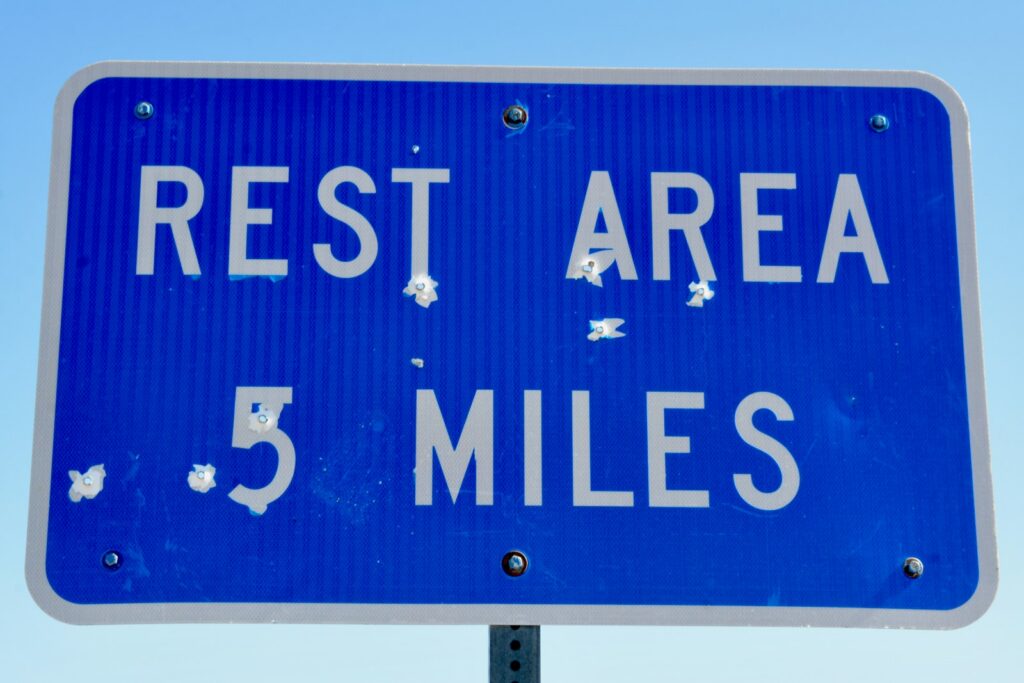
A service sign is the blue rectangle with a white symbol on it, and on your permit test the correct answer is almost always some version of “services available ahead.” The federal manual that designs these signs splits them into two families that look nearly identical from the driver’s seat: General Service signs, which report that a service exists, and Specific Service signs, the logo panels that name the businesses providing it. One is paid for by the public. The other is a permit a business buys from the state every year. Below is a walk through the blue family, the eligibility rules each sign satisfies before it goes up, and the blue markings that are not service signs at all.
What makes a sign a service sign
The color is not a style choice. Section 2I.02 of the Manual on Uniform Traffic Control Devices, 11th Edition carries it as a Standard: “All General Service signs and supplemental sign panels shall have a white legend and border on a blue background.” Standard language in the MUTCD is mandatory, not advisory, which is why the shade never drifts state to state the way local street-name signs do.
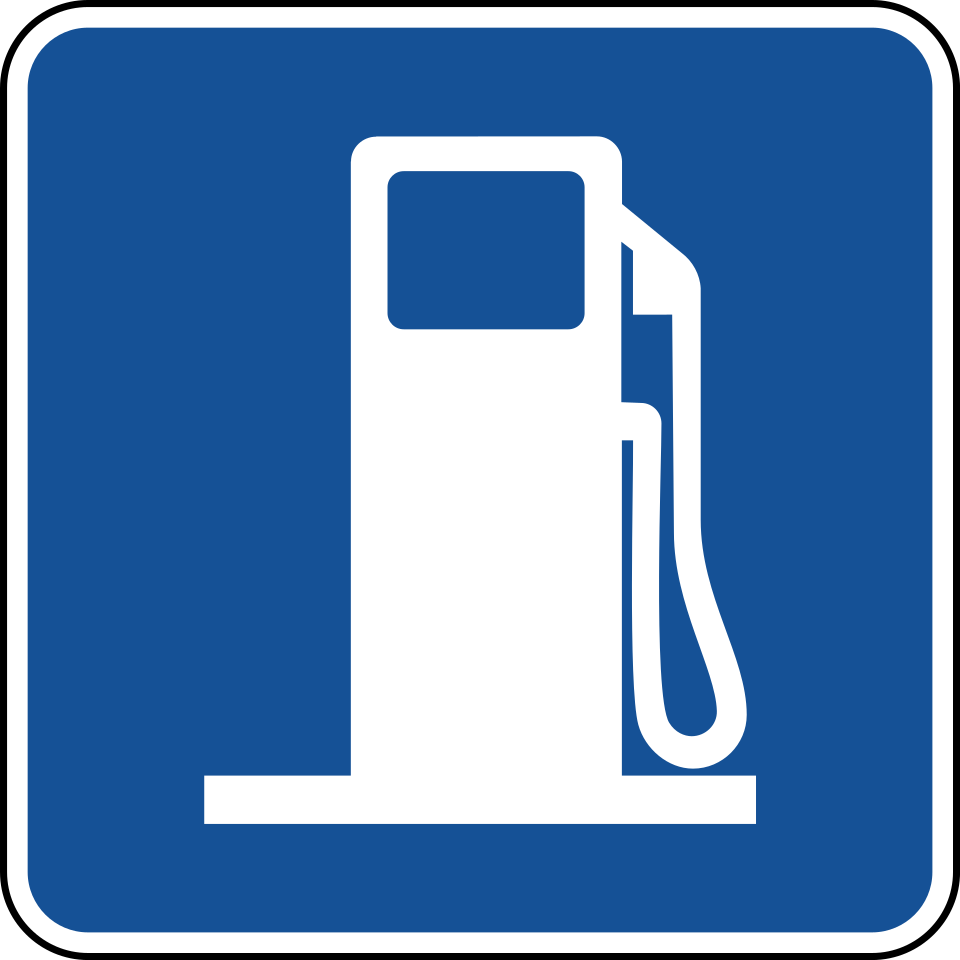
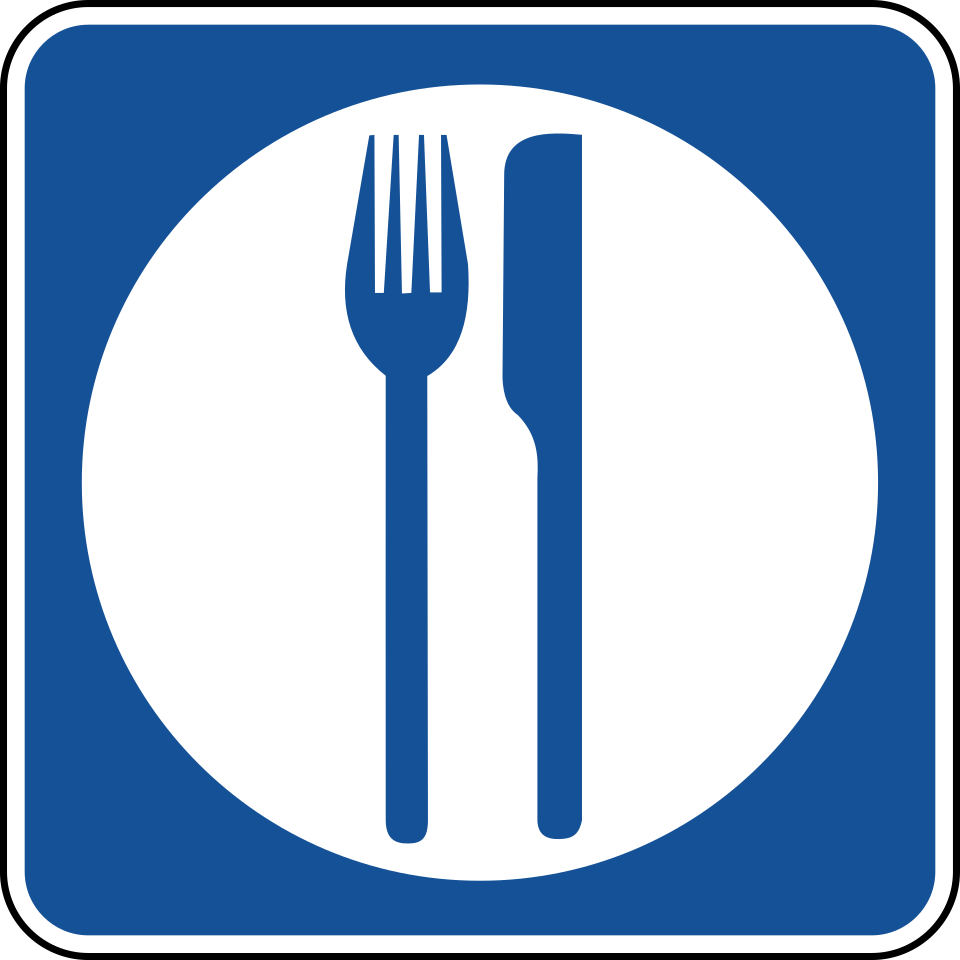
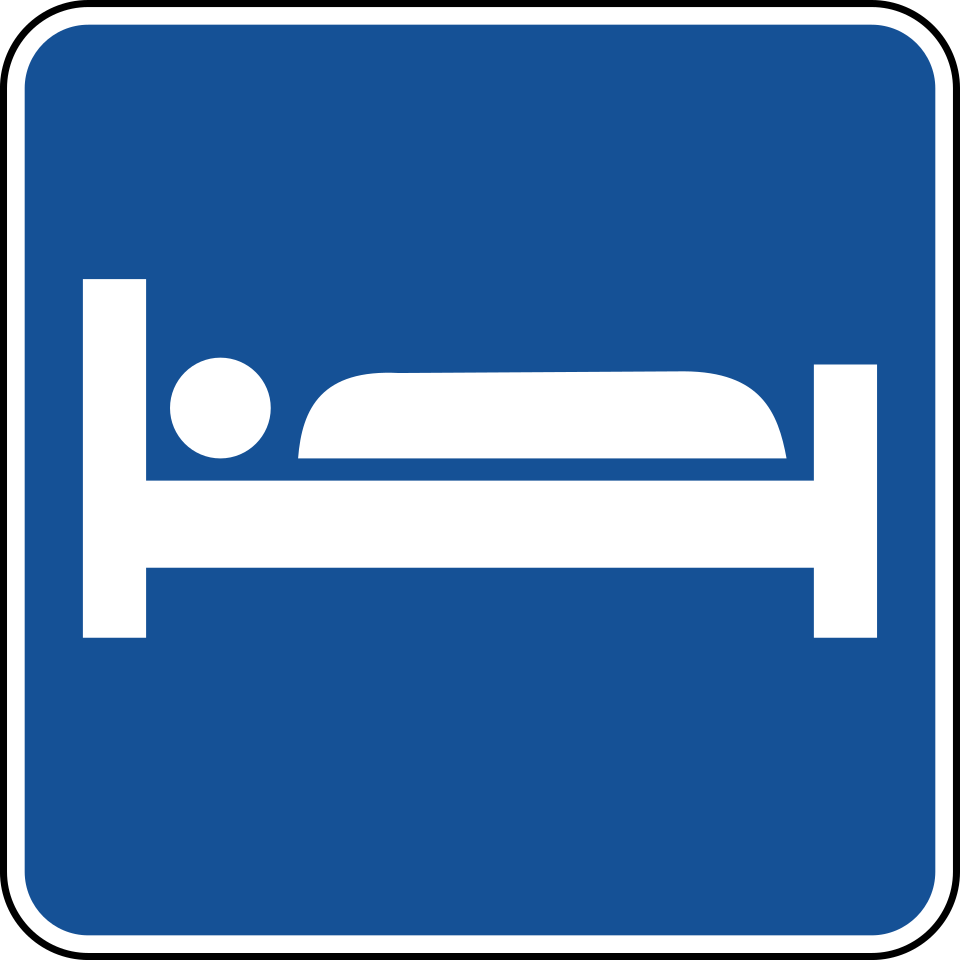
Where these signs sit in the manual’s own taxonomy surprises anyone studying from a handbook summary. Table 2A-2 in Chapter 2A of the MUTCD lists no “service” category at all. It lists Information signs, then splits that class into three rows: Evacuation Route, Road User Service and Recreational. Blue backs the first two, brown the third. Individual services then carry D9 codes, and each code drags a rule behind it strict enough to disqualify real businesses.
| Sign | Code | What it promises | The rule behind it |
|---|---|---|---|
| Gas | D9-7 | Fuel, oil, water | Open 16 hours a day, 7 days a week on a freeway |
| Food | D9-8 | A place to eat | 2 meals a day, at least 6 days a week |
| Lodging | D9-9 | A place to sleep | Adequate sleeping accommodations, sanitary facilities |
| Hospital | D9-2 | Emergency care | Facilities operating 24 hours a day, 7 days a week |
| Pharmacy | D9-20 | A 24-hour pharmacy | Pharmacist on duty around the clock, within 3 miles |
| Camping | D9-3 | A campground | Adequate parking, sanitary facilities, drinking water |
| Tourist Information | D9-10 | A staffed info center | May substitute for any service on a combined sign |
| EV Charging | D9-11b | Fast charging | DC Fast Charger criteria in 23 CFR 680.106 |
Two formatting rules explain what shows up on the highway. Symbols and word messages “shall not be intermixed on the same sign,” and no more than six services may share one sign. Where symbols are used the manual prescribes the layout: gas, food and lodging on the top row, phone, hospital and camping on the bottom. At an intersection the sign must carry a directional message, and Advance Turn or Directional Arrow plaques below it build what the manual calls a General Service directional assembly. Our road sign reference hub sets that grid against the other classes of traffic signs.
The one blue sign a business pays for
Chapter 2J covers Specific Service signs, the tall blue panels carrying company logos. Eligible categories are limited to six: gas, food, lodging, camping, attractions and EV charging. These are the signs people mean by “the big blue exit signs,” and they run on a different economic model from every other sign on the road.
Section 2J.12 requires each highway agency to adopt a signing policy determining “the costs to businesses for initial permits, installations, annual maintenance, and removal of business identification sign panels.” Stop signs are paid for by the public. A logo panel is rented, and published rates vary widely from one DOT program to the next.
| State | What a business pays | Program detail |
|---|---|---|
| South Dakota | $50 application per sign, then $155 per sign per year | Rental model run by the state DOT |
| Illinois | $100 processing, then $200 per freeway panel and $130 per ramp panel | Businesses must be open 7 days a week year round |
| Iowa | $230 per sign per year | Four signs, one per approach direction, runs $920 a year |
Placement is rationed as tightly as price. No more than four Specific Service signs may stand on one approach, and where several appear they run in a fixed order: attraction, camping, lodging, food, EV charging, then gas. One sign carries no more than six business panels and no more than three service types. Distances generally should not exceed 3 miles, though a state may extend the radius in 3-mile increments until somebody signs up or 15 miles is reached.
Two details in Section 2J.03 date the current edition. A logo “that resembles an official traffic control device shall not be used,” and scanning graphics visible from the roadway, meaning QR codes, are prohibited outright. Both arrived with the December 2023 rewrite of the MUTCD, and no permit-test study guide reviewed for this piece mentions either.
What a business has to prove to get on the sign
Federal criteria set the floor and states build on top. The MUTCD asks state policies to weigh a specific list before a business qualifies, and the numbers are unusually concrete for a design manual.
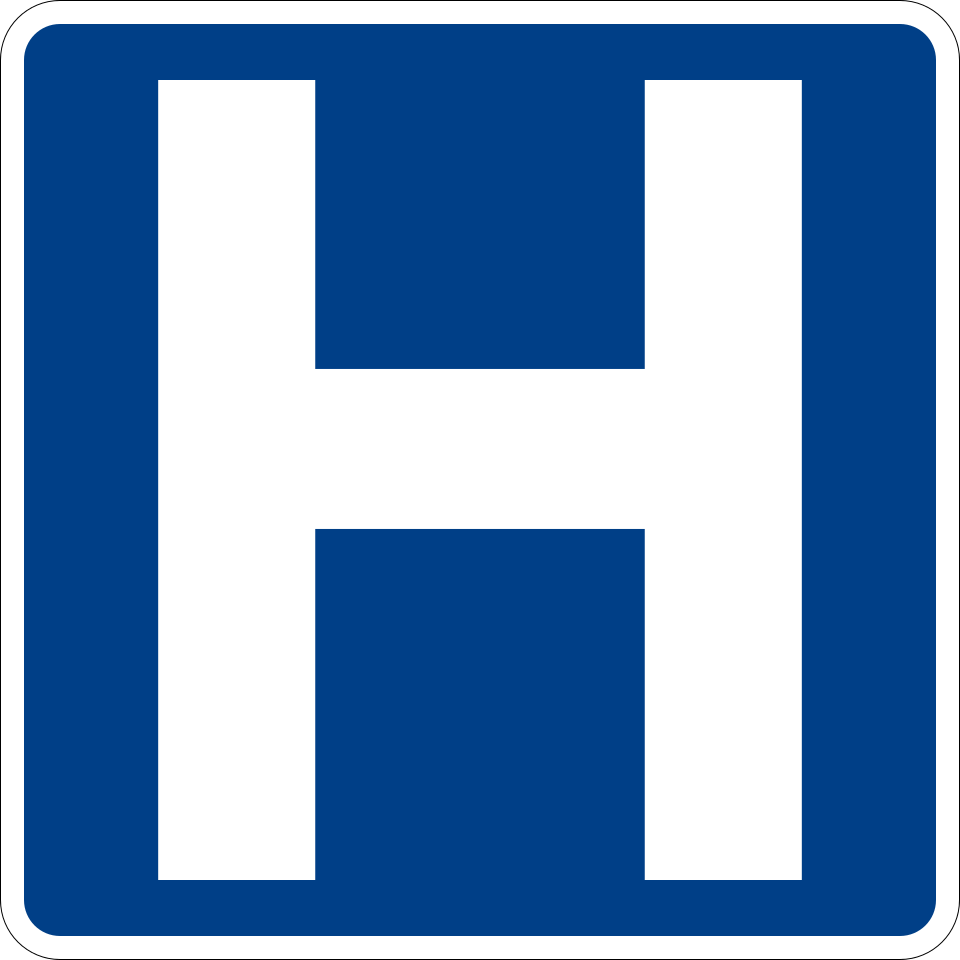
The freeway thresholds above soften on smaller roads: a gas station needs 16 continuous hours a day on a freeway, but only 12 on a conventional road. Attractions carry the vaguest test and the highest bar, requiring regional significance, adequate parking, and a primary purpose of providing amusement, historical, cultural or leisure activities to the public.
Iowa’s program shows how a state sharpens those into countable thresholds. A restaurant needs at least 10 customer seating spaces and 40 hours of operation across 6 days, a motel at least 10 units, a campground at least 20 spaces, and a gas station has to provide free air and tire repair alongside the fuel. Iowa measures its 3-mile radius “from the beginning of the exit ramp taper,” tightening to 1 mile where 8 or more businesses of a type qualify. Full criteria sit on the Iowa DOT logo sign program page, and South Dakota DOT publishes its own fee schedule alongside the rules governing eligibility.
Seasonal businesses drive the rule that most changes what a driver sees in winter. For any service operated seasonally, General Service signs “shall be removed or covered during periods when the service is not available,” and Chapter 2J extends that to logo panels so drivers never read a leftover legend as a promise of something gone.
The blue that is not a service sign
Here is where the color rule people memorize starts to leak. Blue on a sign face means road-user services, never warnings, lane assignments or speed limits. Blue on the curb means something else entirely, and it is enforceable.
California Vehicle Code Section 21458 assigns meanings to painted curb colors, and blue denotes “parking limited exclusively to the vehicles of disabled persons and disabled veterans.” Red prohibits stopping; green marks time-limit parking. The full text of CVC 21458 reads in a minute, and most states run a near-identical scheme. Picture a 16-year-old on a fresh Sacramento permit stopping outside a pharmacy, seeing blue paint, remembering that blue means services, and parking. The blue overhead is information. The blue under the tires carries a fine under CVC 21458. Our guide to parking prohibition signs covers the rest of that scheme.
Wheelchair symbols split the same way. As D9-6 the International Symbol of Accessibility is a blue General Service sign from Chapter 2I reporting that accessible restrooms and ramps exist. As R7-8 it becomes Accessible Parking, a regulatory sign from Chapter 2B that “shall be used to designate the space.” One symbol, two chapters apart: one describes, one commands.
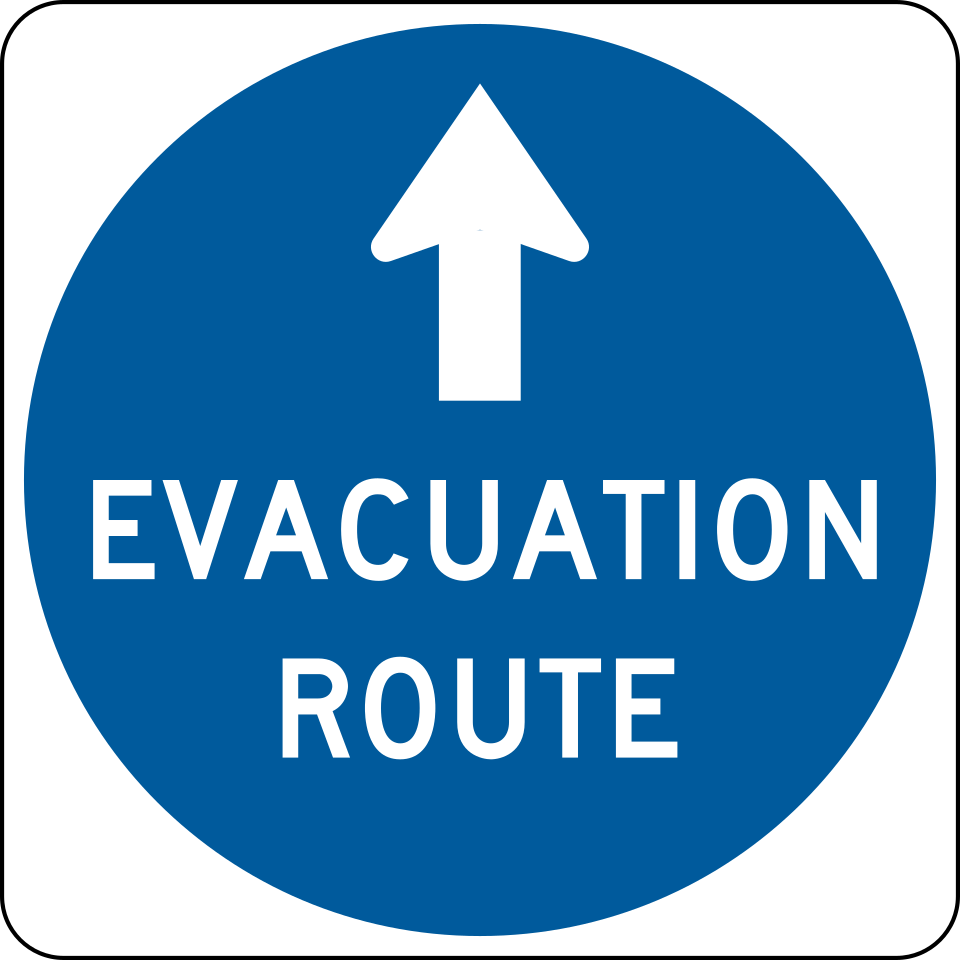
Evacuation Route signs push the point further. The EM1 series is blue with a white legend, yet Chapter 2N files it under Emergency Management. States may add the word HURRICANE above the EVACUATION ROUTE legend, and the sign should stand 150 to 300 feet ahead of any turn. Another blue-and-white sign, the emergency notification placard at a railroad crossing, gives a phone number and a crossing ID rather than a service, as our guide to the crossbuck assembly explains. Blue tells you the message is informational. It does not tell you the message is about lunch.
Rest areas, oases and the rest of the blue family
Beyond the D9 symbols sits the D5 series, which handles places rather than services. Rest Area Advance (D5-1), Next Rest Area (D5-6), Parking Area (D5-9), Picnic Area (D5-10) and Scenic Area (D5-11) all run blue, stretching to 132 by 78 inches on a freeway. Mountain states add Brake Check Area (D5-13) and Chain-Up Area (D5-15).
Interstate Oasis signing (D5-12) is the least-known member. An Oasis is a private facility near an Interstate offering products, 24-hour public restrooms and parking for cars and heavy trucks, designated by the state under an FHWA policy dated October 18, 2006, and its D5-12 sign stands at least 800 feet clear of other guide signs.
Communication services round out the group: Travel Info Call 511 (D12-5), Emergency Call 911 (D12-4), Radio-Traffic Information (D12-1a) and Roadside Assistance (D12-6). One plaque worth recognizing is Next Services Advance (D9-17P), which appears when the next point offering services is 10 miles or more away, because the manual treats a gap that long as information a driver needs.
Color has one genuine exception, and it is geographic. Recreational and cultural interest area signs are white on brown under Chapter 2M, and inside such an area General Service symbols may appear white on brown too. The identical gas pump symbol is therefore blue on the interstate and legitimately brown inside a national park, with nothing changed but which side of the boundary the post stands on.
What permit tests actually ask about blue signs
Building DMV Ready, we tag every question in our bank by subject, which lets us count what tests emphasize instead of guessing. Across roughly 4,000 questions covering all 50 states and DC, only 26 mention blue anywhere in the question text or answer choices. Red appears in 181, yellow in 163, white in 97, green in 77, orange in 33, and brown in just 7. Blue sits near the bottom of the color ladder, the opposite of the impression left by study guides that give every sign color equal billing.
The distribution inside those 26 is the part we did not expect. Only 6 test the meaning of a blue sign. The other 20 use blue for something else: emergency and snowplow lights, the colors that trigger a move-over law, auxiliary lights that are illegal on a private vehicle, blue curb paint under statutes like CVC 21458, and the blue field on the bottom half of the Interstate shield. Blue is the color our bank most often attaches to something that is not a sign, which is why the curb question and the light-color questions catch drivers who studied only the color chart.
When a question does target the sign, the phrasing stays stable. “What does a blue rectangular sign generally indicate” wants “services available ahead,” and “what color are signs that direct you to services like rest areas, hospitals, and fuel stations” wants “blue.” When we re-verified our bank against official state sources, correcting 28 answers, the service-sign questions came through untouched, because the underlying MUTCD Section 2I.02 Standard has not moved. Practice them in California, Illinois, Iowa, South Dakota or any jurisdiction on our state practice test hub and the answer travels with you.
Frequently asked questions about service signs
These are the questions drivers most often type into a search box after seeing a blue sign, answered against the current federal manual and state program pages rather than from memory.
Blue is the easiest sign color to learn and the easiest to over-apply. Learn the 8 D9 symbols above, remember that the logo panels beside them are rented under Section 2J.12 rather than earned, and keep one exception in mind: blue on a sign is information, blue on a curb is a rule under statutes like CVC 21458. Run a few timed rounds through our road signs practice test, then compare how blue behaves against the two classes it is most often confused with in our guides to regulatory signs and warning signs. When the color stops being a guess, the sign questions on your state exam stop being the ones that cost you points.