Permit Test for Non-Citizens: Visa Holders and Residents
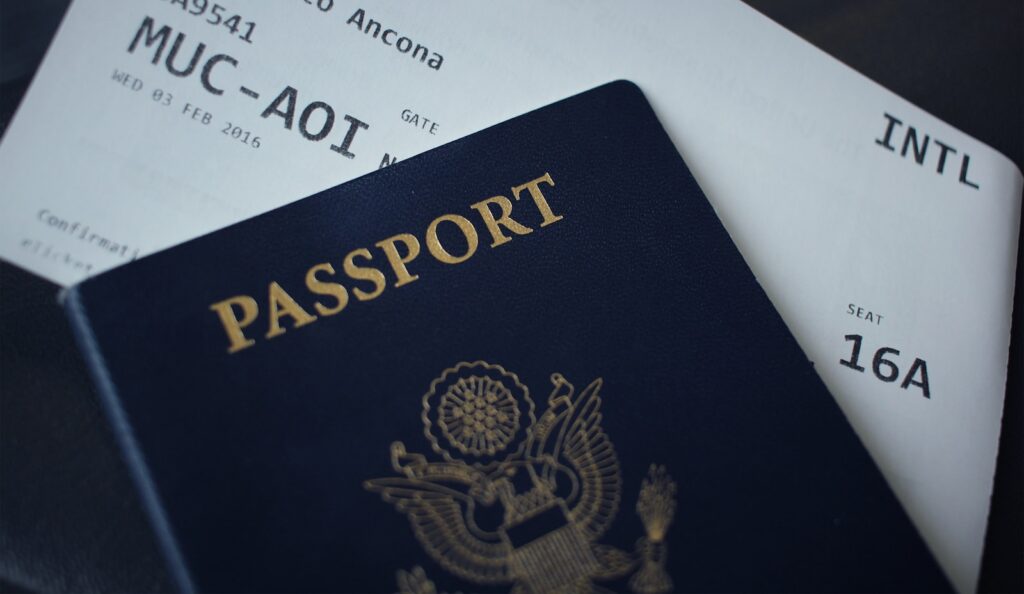
If you are in the United States on a visa or as a permanent resident, you can take the DMV permit test in almost every state. Citizenship is not the gate. Lawful presence is. The knowledge exam itself is identical to the one a citizen takes: the same road signs, the same right-of-way rules, the same passing score. What changes is the paperwork you bring to the counter and how long your permit stays valid once you pass. This guide breaks down the documents each visa type needs, the Social Security Number rule that trips people up, and the one-year expiration trap under 6 CFR 37.21 that catches F-1 students who assume their permit lasts as long as their studies.
Yes, non-citizens can take the permit test
The permit test measures whether you know how to drive safely. It does not check your immigration status as part of the exam. A green card holder, an H-1B engineer, and a high school junior born in the state all answer the same questions and need the same passing percentage. In California you need 38 of 46 correct; in Texas the written test runs 30 questions at 70 percent; in Florida you face 50 questions at 80 percent. None of those numbers shifts because you hold a foreign passport.
The real hurdle sits at the front desk, before the test. Every state requires proof that you are lawfully present, and the document menu depends on your visa. There is one large exception worth stating up front: tourists generally cannot get a permit. The New Hampshire DMV puts it plainly, noting that visitors on a B1 or B2 tourist visa, or a K1 or K2 fiance visa, are not eligible for a driver license or non-driver ID. Most states follow the same logic. If you are here short-term as a visitor, you are expected to drive on your foreign license or an International Driving Permit, not to apply for a state credential.
Documents you need, by visa type
Bring your passport, your most recent visa stamp, and the immigration document that proves your category. The table below covers the common cases. Carry originals, not copies, and check that nothing on the list is close to expiring (more on that below).
| Status | Core documents to bring |
|---|---|
| F-1 student | Passport, visa stamp, Form I-94, and Form I-20 |
| J-1 exchange visitor | Passport, visa stamp, Form I-94, and Form DS-2019 |
| H-1B or L-1 worker | Passport, visa stamp, Form I-94, and Form I-797 approval notice |
| Permanent resident | Permanent Resident Card (green card, Form I-551) |
| Refugee or asylee | Form I-94 with refugee stamp or asylum approval, or travel document I-571 |
| TPS, DACA, or work permit | Employment Authorization Document (EAD, Form I-766) plus Form I-94 |
Florida’s published list for non-immigrants shows the pattern clearly. According to the Florida Department of Highway Safety and Motor Vehicles, an F-1 student presents an I-94 accompanied by an I-20, a J-1 visitor presents an I-94 with a DS-2019, and a worker can present an EAD card (Form I-766). Proof of your home address is also required, the same as any other applicant. The full document checklist for a learner’s permit covers the residency and identity proofs every applicant brings.
Two categories deserve a note. Permanent residents have it simplest: a single Form I-551 green card proves both identity and lawful status, with no one-year expiration to worry about. Refugees and asylees sit in between. Once status is granted, an I-94 with the refugee or asylum stamp, or an Employment Authorization Document, opens the same path as any other lawfully present applicant, and many states treat asylees and refugees more like residents than like temporary visitors. If you hold Temporary Protected Status or a work permit through DACA, your Form I-766 EAD is the anchor document, paired with the I-94 that shows your current period of stay.
The Social Security Number rule (and the workaround)
Most states ask for a Social Security Number. If you have one, bring the card or another document that shows it, such as a W-2 or a pay stub. Florida adds a detail people miss: the name attached to the SSN must match the name that will print on the license exactly. A mismatch sends you home.
If you have never been issued an SSN, you are not stuck. States handle the gap in three different ways, and knowing which one applies to you saves a wasted trip.
| State | If you have no SSN |
|---|---|
| California | Exempt once lawful status is verified; no SSA letter needed |
| Florida | Non-immigrants without a work visa need no SSA ineligibility letter |
| New York (in person) | Sign an affidavit (Form NSS-1A) of never having been issued one |
| Texas | Complete a Social Security Number affidavit (Form DL-13) |
| Utah | Provide a letter from the SSA confirming ineligibility |
| Connecticut | Provide an SSA ineligibility letter |
The split matters because the SSA letter route adds a step. To get that letter, you visit a Social Security office, get told you are ineligible, and carry the written denial back to the DMV. States like Utah and Connecticut require it; California and Florida do not. New York accepts Form NSS-1A and Texas accepts Form DL-13 as a sworn affidavit instead, which you sign at the counter.
The limited-term trap: why your permit expires in one year
Here is the surprise that catches F-1 students and many workers. Your immigration paperwork may say your stay lasts for “duration of status,” with no fixed end date. Your permit will not. Federal REAL ID rules force states to cap these credentials. Under 6 CFR 37.21, a state cannot issue a temporary or limited-term license for longer than your authorized stay, and if there is no expiration date on your document, the license is valid for no more than one year.
States apply this directly. Florida issues the credential for the period on your USCIS document, “not to exceed one year.” Texas marks the card “Limited Term” and, according to the Texas Department of Public Safety, it expires when your lawful presence expires, defaulting to one year for duration-of-status cases. Renewal is rarely available online for visa holders. You return in person, prove your status again, and if your original window has lapsed, show a status change or extension. Build that annual renewal into your calendar the same way you track an I-20 or an EAD.
The 19 states that do not ask about immigration status
Nineteen states plus Washington D.C. issue a standard driver license or permit regardless of immigration status. The New York DMV, under the Green Light Law that took effect December 16, 2019, lets residents 16 and older apply with a combination of identity and residency documents, signing an affidavit if they have no SSN. The list of these states is below.
| Region | States issuing licenses regardless of status |
|---|---|
| West | Eight from Hawaii to Colorado: California, Colorado, Hawaii, Nevada, New Mexico, Oregon, Utah, Washington |
| Midwest | Illinois, Minnesota |
| Northeast | Eight from Vermont to Maryland: Connecticut, Delaware, Maryland, Massachusetts, New Jersey, New York, Rhode Island, Vermont |
| South | Virginia, plus Washington D.C. |
In these states the document menu also loosens. Instead of a visa stamp, applicants typically prove identity with a valid foreign passport or a consular identification card, then show two proofs of in-state residency such as a lease, a utility bill, or a bank statement. The knowledge test and road rules stay exactly the same; only the identity paperwork shifts.
One thing to understand about these credentials: they are marked “NOT FOR FEDERAL PURPOSES” or “Federal Limits Apply.” You cannot use them to board a domestic flight or enter a federal building. Illinois finished phasing out its old Temporary Visitor Driver’s License in 2026 and now issues this standard marked license instead. A few states moved the other way: Florida, Tennessee, and Wyoming have passed laws refusing to honor out-of-state licenses issued specifically to undocumented drivers, so a license valid at home may not protect you across a state line.
Common mistakes non-citizens make at the DMV
The errors that cost people a second trip are predictable, and all of them are avoidable.
Consider a common scenario. An F-1 student lands in August, drives to the DMV in week one, and gets turned away because the federal SAVE system has not yet verified an arrival the student database only registered days earlier. The fix is patience: wait about ten days after you have been in the country and active in your school’s records so DHS systems can confirm your status before you apply.
- Applying on a tourist visa. B1, B2, K1, and K2 holders are generally ineligible. Use a foreign license or International Driving Permit instead.
- Documents that expire too soon. Florida requires that your documents be valid for more than 60 days from the date of issuance. A visa weeks from expiry can stall the whole application.
- Name mismatch. If the name on your SSN record does not match your passport exactly, fix it with the SSA before your DMV visit.
- Forgetting the vision screening. Every applicant takes it. Review what to expect in the DMV vision test guide so corrective-lens rules do not surprise you.
How to prepare for the knowledge test
Because the exam content is identical for everyone, prep is identical too. Learn the regulatory signs cold, starting with the meaning of the stop sign and the yield sign, then drill right-of-way scenarios, which trip up the most test-takers. If English is your second language, several states offer the exam in other languages, covered in the guide to the permit test in Spanish. Pick your state from the state practice hub, whether that is the high-volume New York permit test or any of the other 50, and run timed practice sets until the passing mark clears with room to spare. Knowing exactly what to bring on test day closes the loop.
Frequently asked questions
Quick answers to the questions non-citizens ask most before heading to the DMV.
Can I take the permit test on a tourist visa?
Generally no. Most states, including New Hampshire, bar B1, B2, K1, and K2 holders from getting a license or permit. Tourists are expected to drive on a foreign license or an International Driving Permit during a short stay.
Do I need a Social Security Number to get a learner’s permit?
Not always. If you have one, bring proof. If you are ineligible, California and Florida exempt you, New York accepts Form NSS-1A and Texas accepts Form DL-13 as an affidavit, and Utah and Connecticut require a letter from the Social Security Administration confirming ineligibility.
Can undocumented immigrants take the permit test?
In 19 states plus Washington D.C., yes. Those states issue licenses regardless of immigration status, marked “Not for Federal Purposes.” In the remaining states, lawful presence documentation is required to apply.
How long is my permit valid as a visa holder?
Usually no longer than one year. Under 6 CFR 37.21, federal rules cap limited-term credentials at your authorized stay, and for duration-of-status cases the maximum is one year. You renew in person and prove your status again each time.
Is the permit test different for non-citizens?
It isn’t. The questions, the passing score, and the vision screening are the same for everyone. Only the documents you present and your license expiration date differ based on immigration status.
Can I use a foreign passport as identification?
Yes. An unexpired foreign passport with a valid visa stamp and your I-94 is a standard identity document at the DMV for non-citizens, paired with your category-specific form such as an I-20 or I-797.
Citizenship has never been the thing standing between an applicant and a learner’s permit. The right documents and a verified lawful status are. Sort out the I-94, the visa stamp, and the SSN situation before the visit, mark the one-year renewal date the day the test is passed, and treat the knowledge exam exactly as any other new driver would. Study the signs, drill the right-of-way rules, and run full practice tests for your state in DMV Ready until a passing score feels routine. Walk in with the paperwork in order and the test itself becomes the easy part.


 Scan to get the app