Learner’s Permit Documents Checklist
Most permit applicants get turned away for one of three reasons: a missing residency proof, an unsigned parent form, or an ID document that does not match the state’s accepted list. The fix is boring but simple - bring four document categories instead of three. Identity, legal presence, Social Security number, and state residency. Add parent consent if you are under 18, plus any state-specific extras like driver education enrollment, a 4-hour drug-and-alcohol course, or school attendance verification. The next sections cover what counts in each bucket, the seven state forms most often forgotten, the fees that catch first-timers, and the rejection scenarios that send applicants home empty-handed.
The Four Documents Every Learner’s Permit Application Requires
Forty-eight states plus DC structure permit paperwork around the same four buckets. Memorize the buckets, then layer state specifics on top.
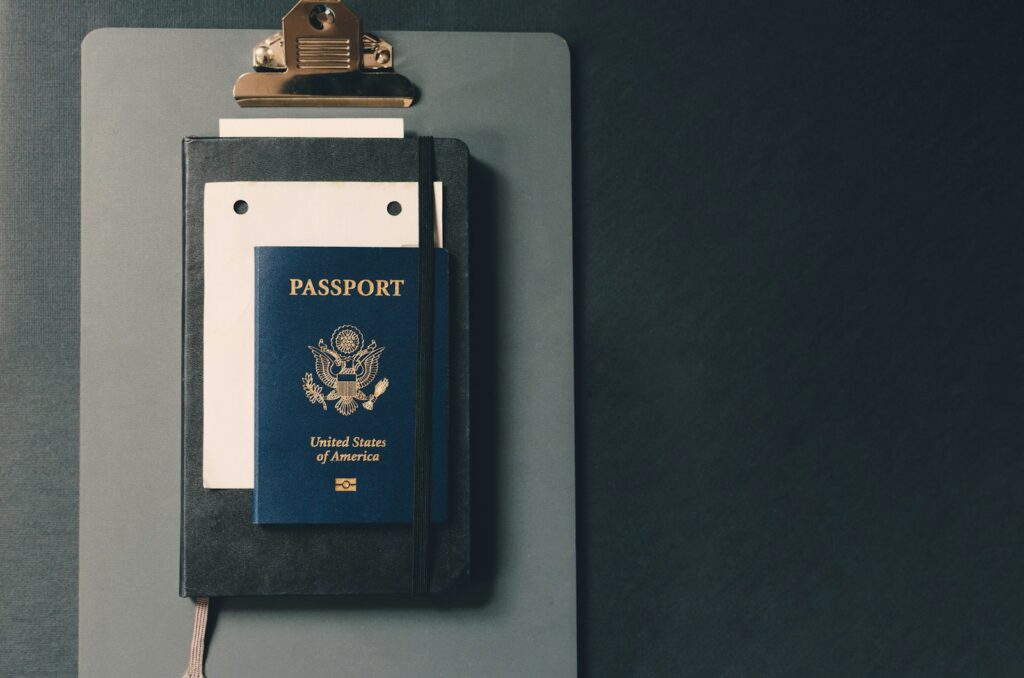
Proof of identity ties you to a legal name and date of birth. A certified US birth certificate with a raised seal is the most common acceptance. An unexpired US passport works in every state and conveniently doubles as proof of legal presence. State-issued IDs alone almost never qualify for first-time applicants because the DMV needs a primary federal-tier document.
Proof of legal presence confirms you can lawfully reside in the United States. A US passport satisfies this in one document. Non-citizens typically present a Permanent Resident card (Form I-551), an Employment Authorization Document, a current I-94 with a valid visa, or a Certificate of Naturalization. The state must verify the document electronically with the federal Systematic Alien Verification for Entitlements system before issuing the permit.
Proof of Social Security number is required if you have ever been issued one. Acceptable forms include a Social Security card, a recent W-2, or a 1099 with the SSN visible; some states accept a signed pay stub. Virginia’s DMV explicitly notes that SSN proof is mandatory if you have been issued one, and non-issuance must be declared in writing.
Proof of state residency shows you actually live where you claim. Most states require two unique documents - utility bill, bank statement, lease, school transcript, or insurance policy. Indiana allows a signed Residency Affidavit when an applicant lives with a parent and has no bills in their name. Browse our state-by-state directory for the precise document list at your local office.
Identity and Legal Presence: What the Counter Actually Accepts
Originals only. No state will accept photocopies, scans, or even notarized duplicates of identity documents. The clerk needs to see the security features, raised seals, and watermarks live.
The standard accepted-identity list across most states includes the following:
- Certified US birth certificate with raised seal (state vital-records office, not a hospital souvenir copy)
- Unexpired US passport or US passport card
- Permanent Resident card (Form I-551, also known as a Green Card)
- Certificate of Naturalization (N-550 or N-570) or Certificate of Citizenship (N-560 or N-561)
- Consular Report of Birth Abroad (Form FS-240) for US citizens born outside the country
- Foreign passport paired with a valid I-94 and visa stamp, for lawfully-present non-citizens
New York runs a six-points-of-identity scoring system that aggregates documents into a numerical total. California uses a similar but simpler tier-one and tier-two split. Either way, the same physical documents satisfy both states. Pull every document the night before, photograph each one front and back, and confirm the names match across the stack. Practice runs of California’s permit test alongside the document audit save a second trip later.
Names that do not match across documents are the second-most-common rejection reason. A student whose passport reads “Maria Elena Garcia” but whose high school transcript reads “Maria Garcia” needs a marriage certificate, court-ordered name change, or notarized name affidavit to reconcile the two. Married applicants whose driver license name differs from their birth certificate face the same hurdle and should bring the marriage license.
Proof of Residency: Why the Two-Document Rule Trips Up Teens
Two unique documents from different sources is the universal residency standard. Two electric bills from the same utility company count as one - applicants who do not understand this rule lose the slot before the vision test starts.
Documents commonly accepted as residency proof include the following list. Recency matters: most states require the document to be dated within 60 to 90 days of your DMV appointment.
- Utility bill (electric, gas, water, internet, or cable - cell phone bills are excluded in several states)
- Bank or credit card statement, dated within 60 to 90 days
- Apartment lease or mortgage statement showing the applicant’s name
- Voter registration card or jury summons
- School transcript, report card, or current school identification with the address printed
- Pay stub, W-2, or tax return showing the applicant’s name and address
- Auto, renters, or health insurance policy declaration page
Teens living with their parents face the obvious problem: most utility bills and leases are in the parent’s name. Indiana solves this with a residency affidavit signed by the cohabiting adult, and most other states accept a similar attestation. Texas takes a different route, accepting the school’s Verification of Enrollment form as a residency-and-status combo. A parent’s tax return listing the applicant as a dependent at the address counts as one proof in most states; pair it with a school transcript and a teen with no bills in their name has both required documents. Skim our breakdown of passing scores by state while you wait.
Parent or Guardian Consent for Applicants Under 18
Every state requires a signed parent or guardian acknowledgment for minors, but the execution rules differ enough to derail an appointment.
California requires the parent or legal guardian to sign the DL 44 application form, either in front of the DMV technician at the office or with the form notarized in advance. Texas mandates Form DL-90A (Notice to Minor Driver) be notarized or that the parent appear in person at the DPS counter. The DPS DL-67 checklist spells this out unambiguously. Pennsylvania uses Form DL-180TD, which can be notarized or signed in person. Florida requires the parent to sign the application in person or have it notarized, and Virginia accepts a parent’s signature directly on the Application for a Virginia Driver’s License.
New York’s Form MV-44 contains a dedicated parent-consent section, and a parent must sign it before submission. Maryland accepts an in-person parent signature at the MVA office and provides a notarized-form alternative for parents who cannot accompany the teen.
Several states layer a financial-liability statement on top of consent. Indiana’s “Agreement of Financial Liability” makes the signing adult legally responsible for damages caused by the minor’s driving - a more serious commitment than a permission slip. Emancipated minors and applicants in foster care use different forms; the court order or foster-placement documentation replaces the parent signature in nearly every state. Reading our guide to how many tries you get to pass alongside the consent form clarifies what happens if the knowledge test does not go well.
State-Specific Extras: Driver Ed, School Enrollment, and Medical Forms
The four-bucket framework covers the universal layer. Several states add a fifth or sixth requirement that catches first-timers off guard.
| Requirement | State(s) | What it is |
|---|---|---|
| Driver education enrollment certificate | California, Texas, Indiana | Proof you are signed up for an approved driver ed course; required at application for under-18 applicants |
| TLSAE / DATA 4-hour course | Florida | Drug, Alcohol, and Traffic Awareness; completion code transmitted electronically to FLHSMV before the DMV visit |
| School enrollment verification (VOE) | Texas (under 18), Maryland (under 16) | School-issued form dated within 30 days; confirms full-time enrollment |
| Medical/physical exam form | Pennsylvania (DL-180 medical section) | Physician signature within 6 months before the 16th birthday |
| ImpactTexas Drivers (ITD) | Texas | Free 1-hour state video; certificate required at the DPS counter for minors |
| ADAP (Alcohol and Drug Awareness Program) | Georgia | 30-question certification course; completion certificate filed before the permit test |
| Driver education enrollment (DL-123) | North Carolina | School- or commercial-program-issued certificate; must accompany the application |
Florida’s TLSAE is the silent killer of teen permit appointments. The course completion is transmitted electronically to FLHSMV; if the provider batches transmissions or the system has a delay, the DMV computer simply will not show the completion and the application stalls. Build a 48-hour buffer between course completion and your DMV appointment.
Pennsylvania’s medical-exam requirement on Form DL-180 is another regular surprise. The form must be completed by a healthcare provider no earlier than six months before the applicant’s 16th birthday, so plan the doctor visit ahead of the DMV slot. Reviewing right-of-way at intersections while you wait turns dead time into productive study.
Permit Fees by State (and the Hidden Add-Ons)
Permit fees range from a few dollars to nearly a hundred. Knowing the exact number prevents card declines and trip-back delays. The table below covers eight states that together represent more than half of US first-time permit issuances.
| State | Permit fee | Notes |
|---|---|---|
| Virginia | $3 | Plus the prorated yearly license cost; cash, check, or card accepted |
| Texas | $16 | Plus a separate $10 photo fee in counties that bill it independently |
| Ohio | $24.50 | Single payment at the BMV; covers permit and the eventual license attempt |
| Pennsylvania | $35.50 | DL-180 application fee; the eventual junior license is billed separately |
| California | $41 | One application fee covers permit plus the license attempt within 12 months |
| Florida | $48 + $6.25 | Class E learner license fee plus the FLHSMV service fee on every transaction |
| Maryland | $50 | Includes the knowledge test; retake fees apply on the third attempt |
| New York | $80 | Combined fee covers the permit and the eventual junior license |
Posted fees are not the whole story. Watch for retake fees of $5 to $20 if you fail the knowledge test, REAL ID upgrade fees in states that issue both tiers, photo fees in counties that bill separately, and 2-to-3-percent credit-card surcharges. The full list of state-specific costs sits in our state directory.
California is the most generous on the bundle: one $41 application fee covers both the permit and the road test attempt within a 12-month window. Virginia is cheapest at $3 for the permit itself, though the prorated yearly license cost brings the practical total closer to $30 to $40. The Virginia DMV publishes the full fee chart on its eligibility page.
Common Reasons Applicants Get Turned Away (and How to Avoid Them)
The DMV staffer is following a checklist. If a single box does not check, the application is rejected on the spot. Our state-by-state list of what to bring to the DMV for the permit test lays the same buckets out as a pre-departure check. No exceptions, no re-trying that afternoon. The same five mistakes account for roughly 80 percent of teen turn-aways.
The “two documents from the same source” mistake. A 16-year-old in Richmond, Virginia, brings two electric bills from Dominion Energy and gets bumped because both came from the same utility account. Two documents must be from different sources - pair the utility bill with a bank statement, lease, or school transcript.
The unnotarized parent form. A Texas teen shows up at the Austin DPS office with a printed DL-90A signed by mom at the kitchen table. Without a notary stamp - or mom in the office - the form fails. The cheapest fix is a $5 notary visit at a UPS Store, AAA branch, or local bank the day before the appointment.
The expired residency proof. Most states reject utility bills, bank statements, or lease pages older than 60 to 90 days. A college student using a September lease for a January DMV appointment will be turned away. Print fresh copies the week of the appointment.
The mismatched name. A student whose passport says “Maria Elena Garcia” but whose high school transcript says “Maria Garcia” needs a marriage certificate, court order, or notarized name affidavit to reconcile the two. Recently-married applicants face the same issue and should bring the marriage license.
The missing driver education enrollment. California, Texas, and Indiana require proof you are signed up for an approved driver education program before issuing a permit to a minor. Walking in without the certificate is the leading turn-away reason in those three states. Stop sign and yield sign drills are better night-before prep than a rushed driver-ed packet.
Frequently Asked Questions
Can I bring photocopies of my documents?
No. Every state DMV requires originals for identity, legal presence, and Social Security verification. Photocopies, scans, and notarized duplicates are rejected at the counter. Bring the actual birth certificate, passport, Social Security card, or Permanent Resident card. Residency proofs (utility bill, bank statement) are usually accepted as printed copies.
What if my parent cannot come with me to the DMV?
Most states accept a notarized consent form in lieu of in-person parent attendance. Texas DL-90A, Pennsylvania DL-180TD, California’s DL 44 signature block, and Virginia’s application form all support a notarized version. Visit a UPS Store, AAA branch, or bank notary with your parent the day before the appointment.
Do I need a REAL ID-compliant permit?
For most applicants, yes - it costs the same and avoids federal-ID hassles. The District of Columbia is the exception, offering both REAL ID and Limited Purpose permits. Limited Purpose covers applicants without a valid Social Security number and cannot be used for boarding domestic flights or entering federal buildings.
What counts as residency if I live with my parents and have no bills in my name?
Several options work. Indiana, Texas, and other states accept a signed residency affidavit from a cohabiting adult. School transcripts and report cards with your address printed count in nearly every state. A parent’s tax return listing you as a dependent at the address counts as one of the two proofs in most states.
Can I use a foreign passport as my identity document?
Yes in most states, paired with a valid I-94 entry record and a current visa stamp. The state electronically verifies the documents through the federal SAVE system before issuing the permit. Verification can take 24 hours to several business days. Tourist-visa holders are not eligible for a learner’s permit in most states.
Do I need a Social Security number if I am not a US citizen?
If you have ever been issued an SSN, you must present proof. If you have never been issued one, you sign an affidavit of non-issuance. Some non-immigrant visa categories (B-1/B-2 tourists, F-2 dependents) cannot get an SSN; the affidavit covers those cases. DC’s Limited Purpose permit is the dedicated path for SSN-less applicants.
How recent do my residency documents have to be?
Most states require utility bills, bank statements, and lease pages dated within 60 to 90 days of the DMV appointment. School transcripts and tax returns are usually accepted within the current academic year. Print fresh copies the week of the appointment.
Next Step: Practice the Knowledge Test by State
The DMV counter does not negotiate. Either the four document categories check out, or the application waits for another day. Pull each document the night before, photograph the originals, and confirm the names and addresses match - a 5-minute audit that prevents the 30-day rebooking penalty most offices charge for failed appointments. Once the permit is in your wallet, the next gate is the knowledge test, which runs anywhere from 18 to 50 questions depending on the state. Practice every category at least twice on DMV Ready by state, then pick a Tuesday or Wednesday morning slot for the appointment - midweek mornings have the shortest wait times in nearly every DMV office.