Author name: Nikolay Gutorov

Nikolay Gutorov is the founder of DMV Ready, the permit practice test app covering all 50 states plus DC. He built its question bank by cross-checking every question against each state's official driver handbook, and re-verified every answer against official state DMV sources in a 2026 accuracy audit (28 corrections shipped). An iOS engineer by background, he writes practical, no-fluff guides to help new drivers pass the written test on the first try.

Close-up of a worn car tire and rim showing shallow tread across the shoulder blocks
Guides

Tire Blowout While Driving: What To Do

A tire blowout does not have one universal correct answer. California tells drivers to hold their speed, Texas tells them to brake gently, and Florida rules the brakes out entirely. This guide sets the current handbook language from five states side by side, explains the physics behind the disagreement, and shows what federal crash data says about why losing control, not the tire itself, is what puts cars in the ditch.
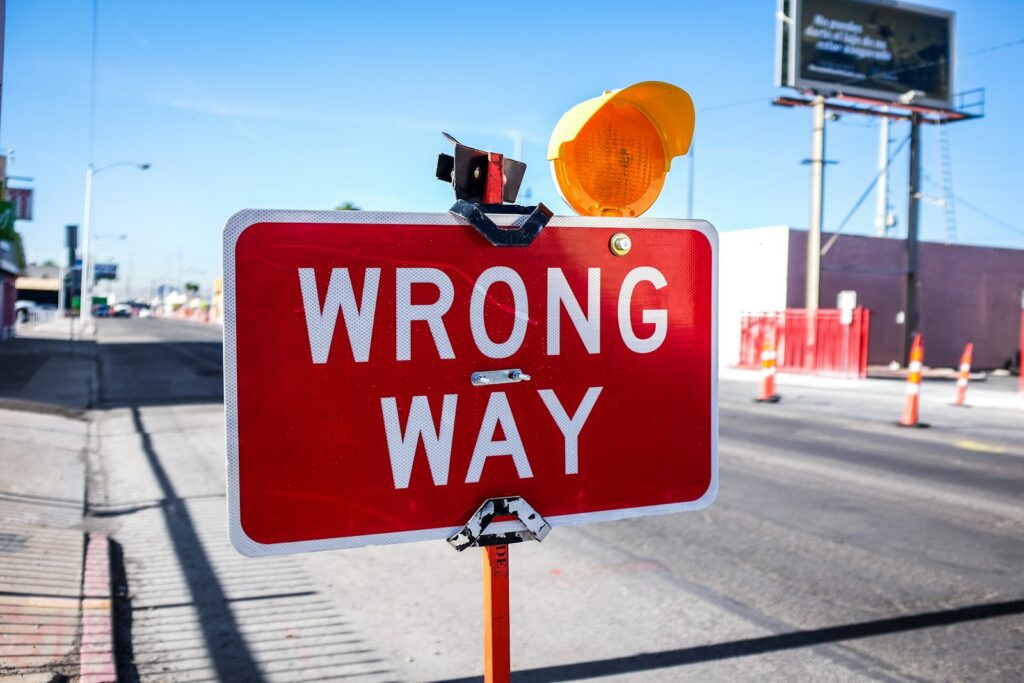
A red and white rectangular WRONG WAY sign mounted at the edge of a paved road under a clear sky
Guides

Rectangular Shaped Sign: What It Means

A rectangle is the only road sign shape the federal manual assigns to three families at once: regulatory, guide, and warning. That makes it the one outline that cannot tell you what a sign does. We walk through MUTCD Table 2A-1, the two regulatory rectangles that break the vertical-means-a-rule shortcut, the nine background colors that carry the real meaning, and how state question banks phrase the rectangle item on the written permit test.

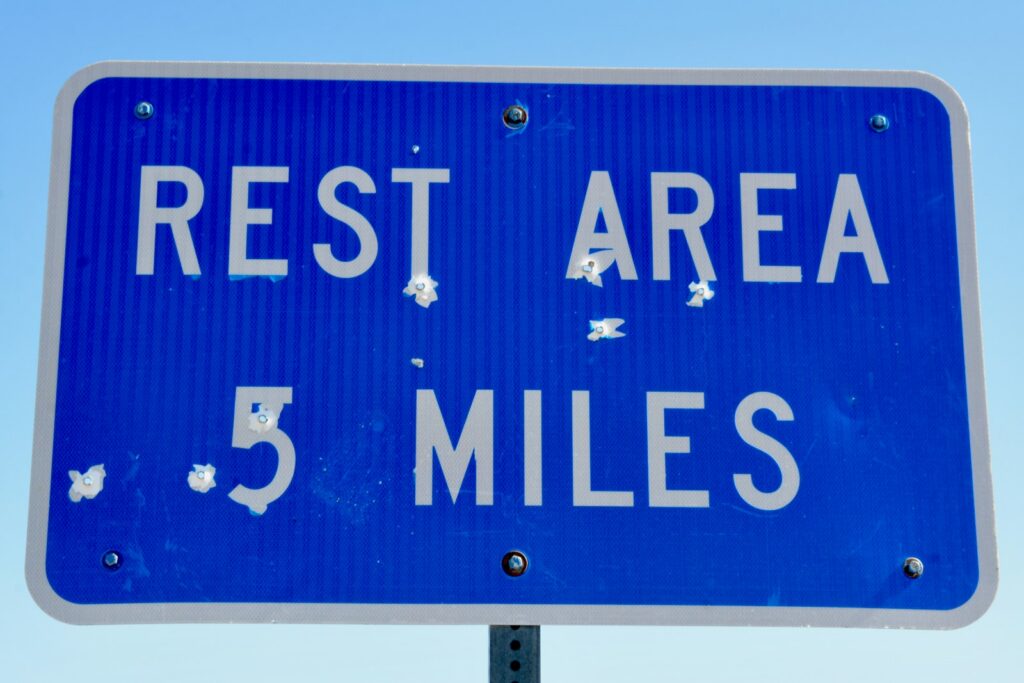
Blue REST AREA 5 MILES highway sign with white lettering against a clear sky
Guides

Service Signs Explained for the DMV Permit Test

The blue signs on the highway are called service signs, and the federal manual splits them into two families: General Service signs that report a service exists, and Specific Service logo panels that name the businesses and charge them an annual fee for the space. This guide decodes the D9 codes, the eligibility rules behind each one, the state fee schedules, and the blue markings that are not service signs at all, including painted curbs and evacuation routes.

Cars traveling on the far roadway of a divided highway, seen across a grass median lined with trees
Guides

Divided Highway Sign: What It Means

A divided highway sign is the yellow diamond that warns you the road ahead splits into two one-way roadways around a median. This guide separates the four signs in the family, W6-1, W6-2, W6-3 and the regulatory R6-3, using the current federal manual, then shows what the median actually changes: who stops for a school bus, where a U-turn is legal, and why crash data says the barrier matters.

Orange diamond ROAD WORK AHEAD sign standing at the edge of a street with traffic behind it
Guides

Warning Signs: What Each Color Means

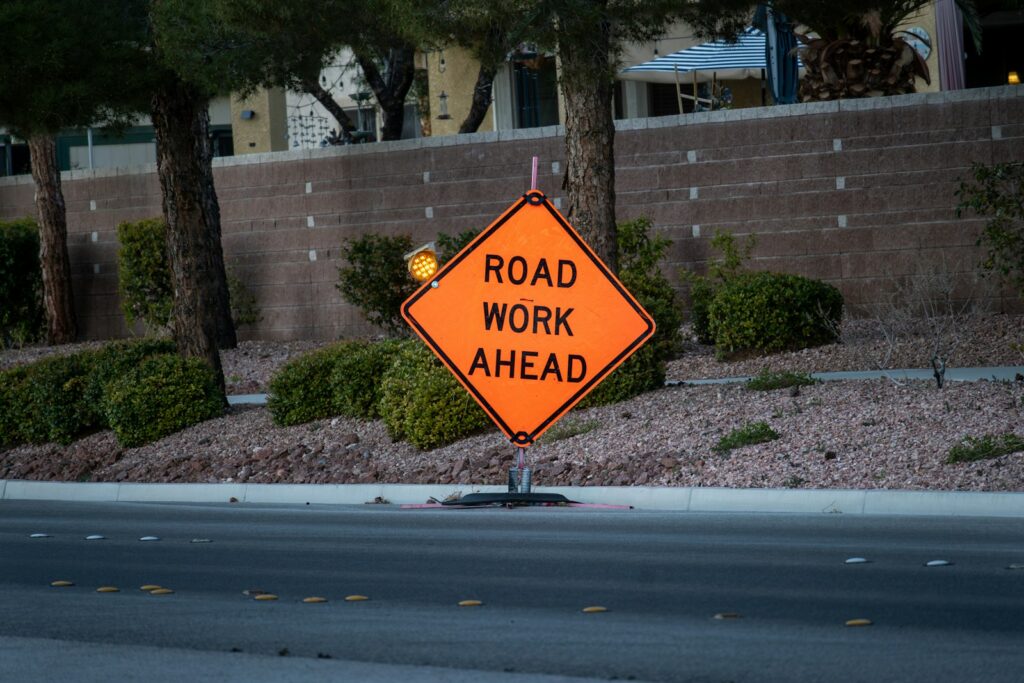
Most study guides teach warning signs as yellow diamonds and stop there. The federal manual is more specific and more interesting: four background colors are in play, three common shapes break the diamond rule, and the distance between a sign and the hazard it announces comes out of a placement table keyed to speed. This guide walks the 11th edition of MUTCD Part 2C, then checks it against the warning-sign questions in our own bank.

Yellow diamond pedestrian crossing sign mounted on a post beside a tree-lined city street
Guides

Pedestrian Crossing Sign: What It Means

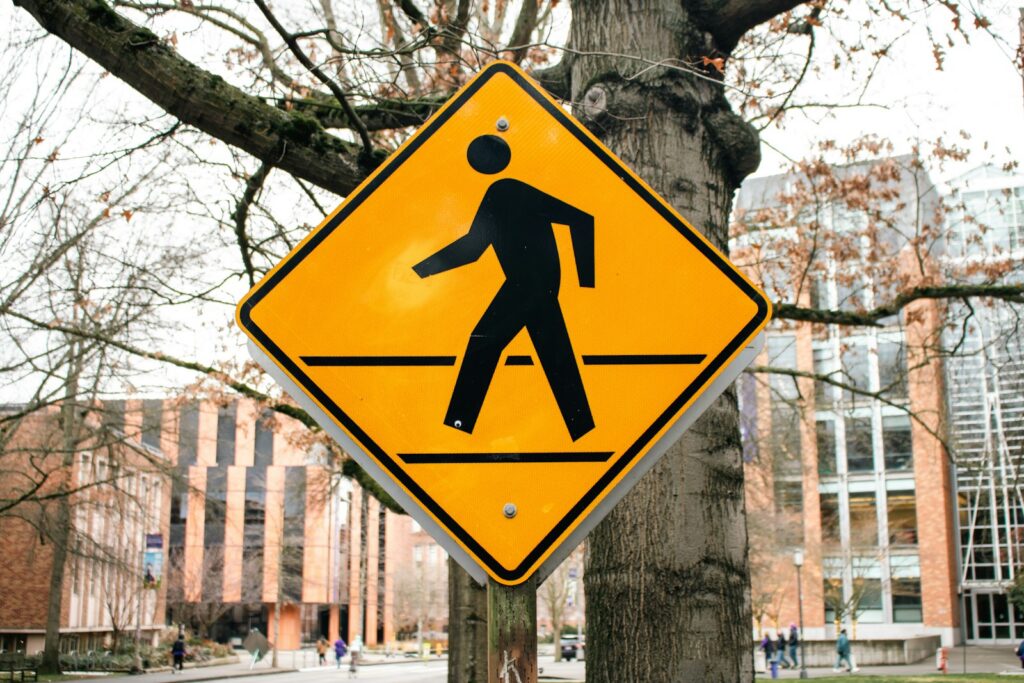
The yellow diamond with a walking figure is MUTCD sign W11-2, and it is a warning rather than a command. The plaque mounted under it tells you whether the crosswalk is at the sign or still ahead, and federal rules bar the sign from approaches already controlled by a stop or yield sign. Whether you must stop or merely yield comes down to your own state statute, which splits the country into two camps.

White and black ONE WAY street signs mounted on a pole above a city street
Guides

Regulatory Signs Explained for the DMV Permit Test

Regulatory signs are the only sign class that carries a legal duty, and the federal manual defines them in one sentence. This guide works through what makes a sign regulatory, the reserved octagon and triangle, the MUTCD Standard that forbids using stop signs for speed control, the all-way stop warrants, and how state vehicle codes in California, Illinois and New York decide when a sign actually binds you. Includes our own question-bank tally of which regulatory signs the permit test asks about most.

Round yellow railroad advance warning sign beside a rural road with a white crossbuck sign standing behind it
Guides

Crossbuck Sign: What It Means

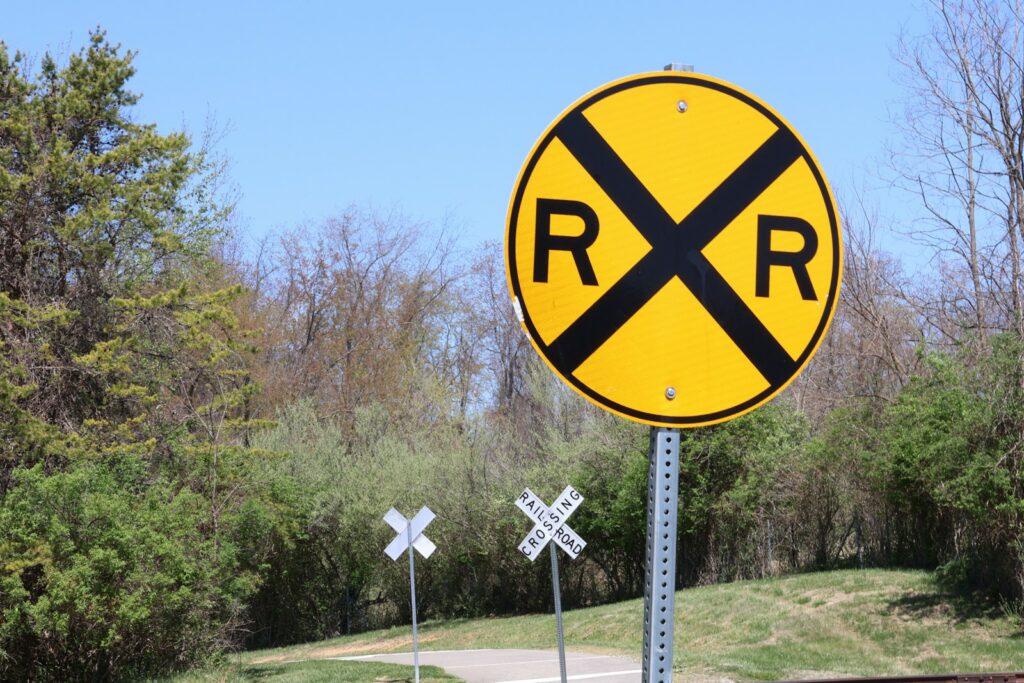
The white X at a railroad crossing is a regulatory sign, not a warning sign, and it means yield to any train on the tracks. Federal rules went further in 2019: every passive crossing now needs a yield or stop sign on the same post as the crossbuck. Here is what the R15-1 sign requires, what the tracks plaque under it is telling you, how far from the rail your state makes you stop, and how to read a crossbuck in the dark.

A California US 101 south directional sign against a clear sky
Guides

California DMV Written Test Retake

The California DMV told roughly 11,000 drivers to retake the written knowledge test in person within 30 days or lose their license. This guide covers what the notice requires, the Vehicle Code sections that give the department its reexamination power, how to book the reevaluation appointment, why there is no online option, the three-attempt rule that can turn a retest into a full reapplication, and a week-by-week study plan built to fit the deadline.

Overhead traffic signal head lit yellow against a pale sky
Guides

What a Flashing Yellow Light Means

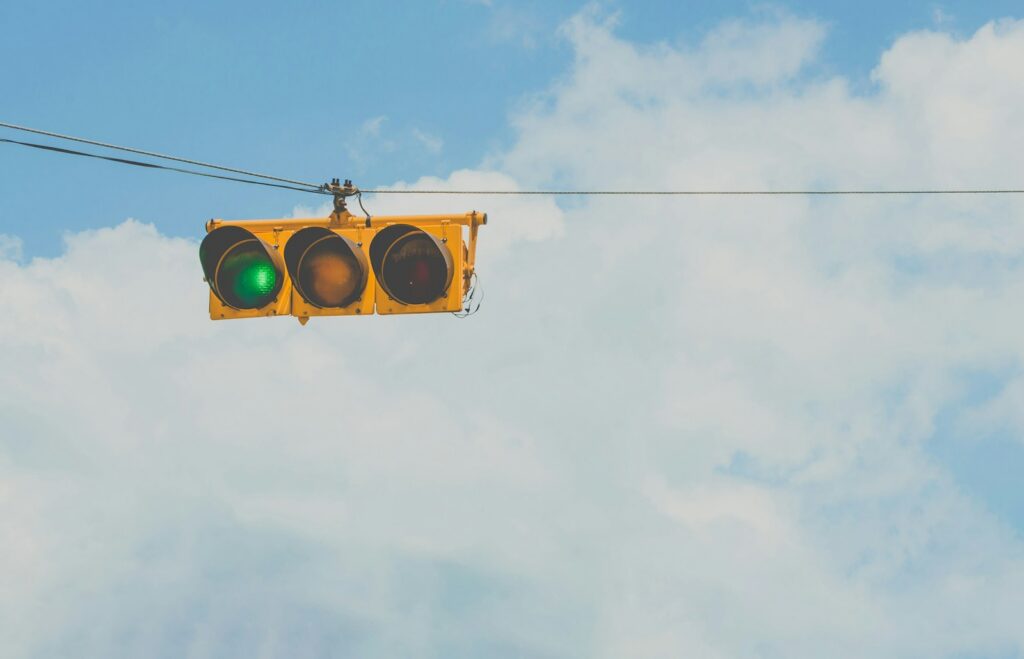
A flashing yellow light lets you enter the intersection without stopping, but it never gives you right of way. This guide separates the flashing circular yellow from the flashing yellow arrow using the federal MUTCD text, compares how California, Georgia, New York and Michigan word the same rule, explains why a completely dark signal is a four-way stop instead, and shows the two answer patterns that settle almost every permit test question on flashing signals.

Scroll to Top